Itaewon vs Haebangchon is the comparison every relocating expat runs into sooner or later — the two neighborhoods sit right next to each other on the map, but they feel like different cities to live in. Both are popular with expats for good reason, and both come up constantly in relocation searches, but the right one depends on your budget, your commute, and how you actually want your evenings to look.
Here’s how they compare, drawn from what we see clients weigh every week. If you’re still deciding on housing type, our guide to renting an officetel or studio is a useful next stop.
Table of Contents
Itaewon vs Haebangchon: The Basics
Itaewon is Seoul’s most internationally known expat district, built up around decades of foreign residents, embassies, and a dense strip of bars, restaurants, and shops. Haebangchon (often shortened to HBC) sits on the hillside just behind it, quieter, more residential, and increasingly popular with expats who want walking access to Itaewon without living inside its noise.
1. Rent and Deposit Levels
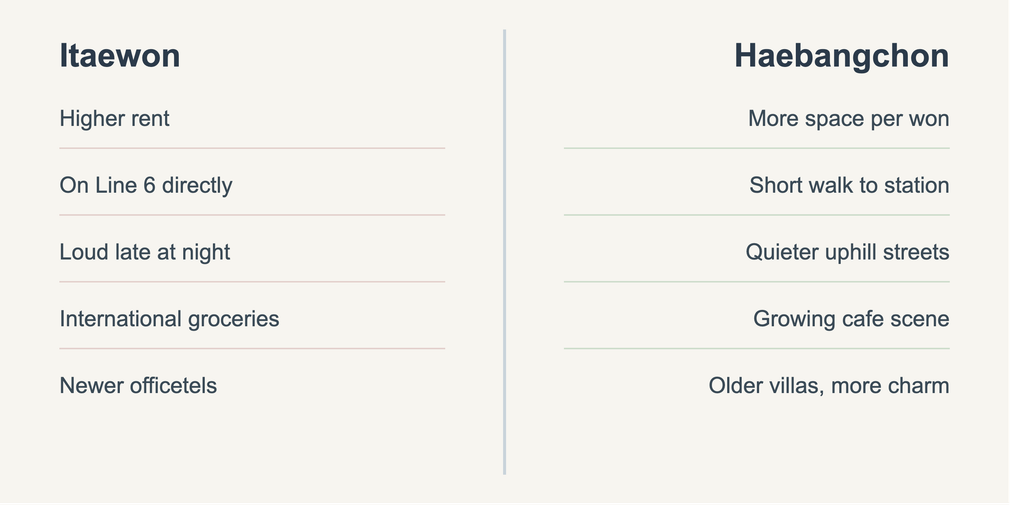
Itaewon’s main strip commands a premium for its location and nightlife access, and officetel or studio deposits there tend to run higher than comparable units a short walk away in HBC. Haebangchon generally offers more space for the same budget, though the tradeoff is a hillier walk and fewer elevators in older buildings. Neither is objectively cheap by Seoul standards, but the gap between Itaewon vs Haebangchon on price is real enough to matter if you’re on a tight budget.
2. Commute and Transit Access
Itaewon sits directly on Line 6, with the station itself in the middle of the district, which matters if your commute runs through central Seoul. Haebangchon has no subway station inside it; residents typically walk down to Noksapyeong Station (also Line 6) or Itaewon Station, which adds 10 to 15 minutes depending on where in HBC you live. If you work somewhere Line 6 doesn’t reach directly, factor in a transfer either way.
3. Noise and Nightlife
This is often the deciding factor. Itaewon’s main streets stay loud late into the night, especially on weekends, and living directly above or near the bar strip means dealing with that noise as a neighbor, not a visitor. Haebangchon has its own bars and cafes, but the residential streets uphill are noticeably quieter, which matters if you work early mornings or simply want to sleep with the windows open.
4. Daily Life and Amenities
Itaewon wins on convenience: international grocery stores, late-night food options, and a dense concentration of services catering specifically to foreign residents. Haebangchon has a growing café and restaurant scene of its own, but for specialty imported groceries or 24-hour options, a short trip down into Itaewon is common even for HBC residents.
5. Building Age and Condition
Itaewon has a wider mix of building ages, including newer officetel developments with elevators, security, and modern amenities. Haebangchon leans older on average, with charming but sometimes dated villas and walk-ups on its steep streets. Before signing anything in either neighborhood, it’s worth running through our red flags when renting in Seoul checklist, since older buildings in particular warrant a closer look at maintenance history.
So, Itaewon or Haebangchon?
If nightlife, subway access, and international amenities are your priority, Itaewon vs Haebangchon usually resolves in Itaewon’s favor. If you want more space for your budget, quieter evenings, and don’t mind a short uphill walk, Haebangchon tends to win. Plenty of residents split the difference by living in HBC and treating Itaewon as their extended backyard, a 10-minute walk away.
If you’d like a closer look at specific listings in either neighborhood, or want to compare them against other areas, reach out through our Contact Us page with your budget and priorities. We’ll help you weigh the tradeoffs against your actual daily routine.