Mapo vs Seongsu is one of the most common comparisons expats make when looking for a home in Seoul. Both are creative, young, and full of independent shops and cafes, but they feel very different once you actually live there. One runs on music, late nights, and university energy; the other on design studios, pop-up stores, and weekend crowds heading to Seoul Forest.
Here’s how the two compare, and the five differences that matter most when choosing. If you’re also weighing neighborhoods closer to the center, see our guide to Itaewon vs Haebangchon for Expats.
Table of Contents
Mapo vs Seongsu: The Quick Overview
Mapo sits in western Seoul and includes Hongdae, Hapjeong, Yeonnam-dong, and Mangwon. It’s known for live music, nightlife, indie shops, and a large student population around Hongik University, along with relaxed residential pockets near the Han River.
Seongsu, in Seongdong-gu on the eastern side, was once a district of small factories and shoe workshops. Many of those buildings have been turned into cafes, galleries, brand showrooms, and offices, and the area has become one of Seoul’s most popular spots for pop-ups and creative businesses. For more on both areas as visitors see them, Visit Seoul is a good starting point.
1. Daily Vibe
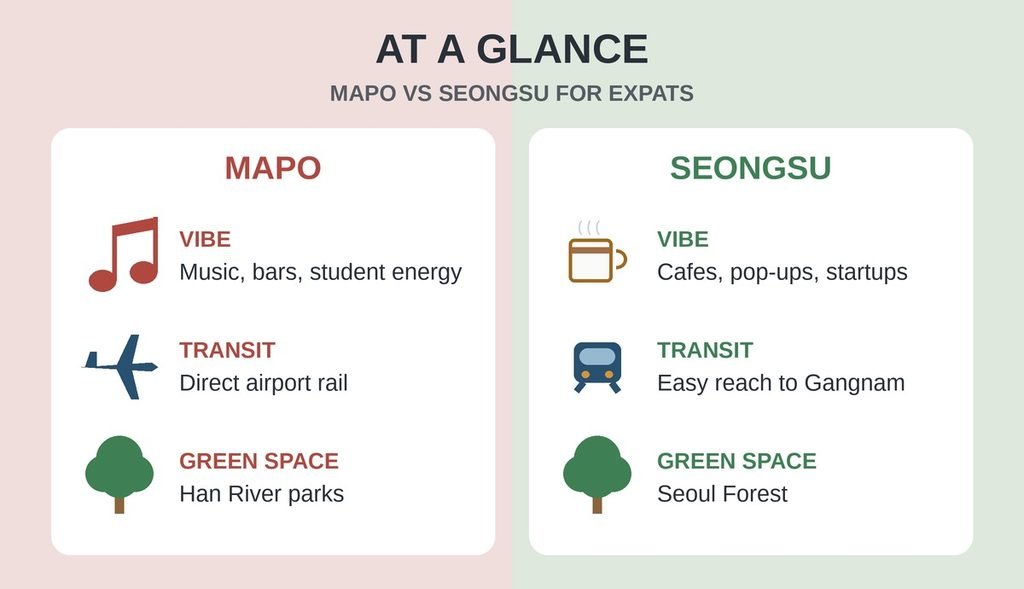
Mapo is livelier at night. Bars, clubs, and live venues keep Hongdae busy well past midnight, while Yeonnam-dong and Mangwon feel calmer and more local. Seongsu is more of a daytime neighborhood, built around cafes, shopping, and design spaces, and generally quieter late at night. Think about when you’re usually out, not just where you’d like to visit.
2. Commute and Airport Access
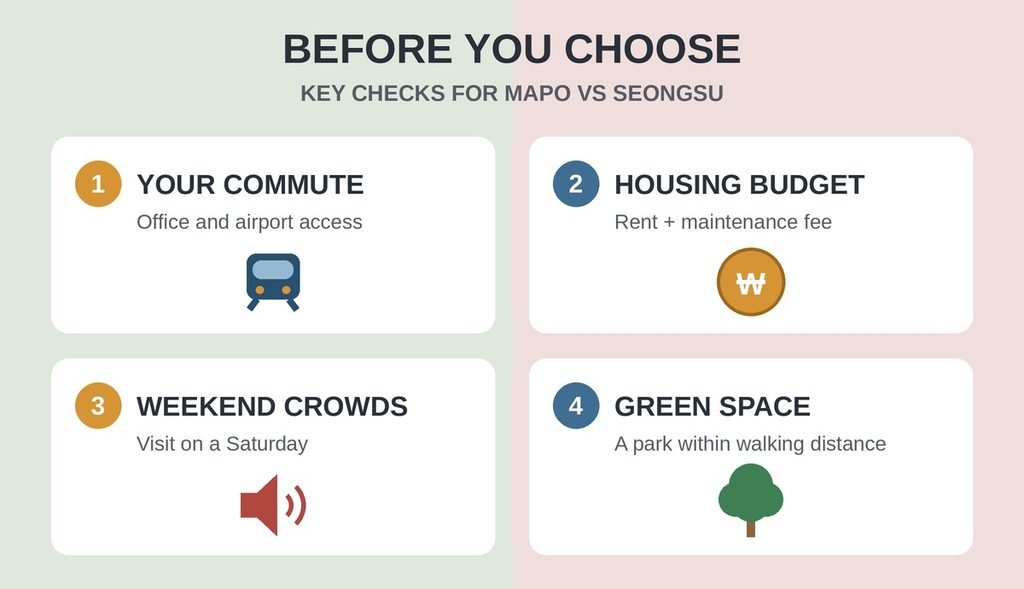
This is often the deciding factor in Mapo vs Seongsu. Hongik University Station connects to Line 2, the Gyeongui-Jungang Line, and the Airport Railroad, giving Mapo direct rail access to Incheon and Gimpo airports. Seongsu sits on Line 2 and the Suin-Bundang Line, with easy access across the river to Gangnam and toward Jamsil. If you work in Gangnam or travel often, the answer may already be clear.
3. Housing Types and Costs
Both areas offer studios, officetels, and older low-rise villas. Mapo has a wide range of options across several sub-neighborhoods, which gives you more room to match your budget. Seongsu’s popularity has pushed prices up in recent years, and the area near Seoul Forest includes some of the city’s high-end apartment towers. Compare the full monthly cost, including maintenance fees, as covered in Paying Utility Bills in Korea.
4. Green Space
Mapo residents have Mangwon Hangang Park along the river and the Gyeongui Line Forest Park, a long, narrow park built along a former railway through Yeonnam-dong. Seongsu has Seoul Forest, one of the city’s largest parks, right on its doorstep. Both are great for walks and running, so the question is simply which park fits your daily routine.
5. Weekend Crowds and Noise
Both neighborhoods get busy on weekends, in different ways. Hongdae draws crowds late into the night, while Seongsu fills up during the day with pop-up lines and visitors. Before signing, visit the street you’re considering on a Saturday, both afternoon and evening. A home one or two blocks away from the main strip can be dramatically quieter.
The Bottom Line on Mapo vs Seongsu
In Mapo vs Seongsu, there’s no single winner. Choose Mapo if you want nightlife, a wide range of housing, and direct airport access. Choose Seongsu if you prefer a daytime cafe culture, Seoul Forest nearby, and a quick trip to Gangnam. Many expats who work at startups in Seongsu or Gangnam also find our guide to Seoul Business Districts helpful for planning around their office.
If you’re comparing homes in either area, reach out through our Contact Us page with your budget, workplace, and target move-in date. We’ll shortlist options that fit your commute and lifestyle, and walk you through Signing a Lease in Korea when you’re ready.