Signing a lease in Korea usually happens fast. You see a place you like, the agent says another tenant is interested, and within an hour you’re sitting at a table with a contract written in Korean and a landlord waiting for your contract deposit. That speed is exactly where most expensive mistakes happen.
Here’s what to check before you sign, and the five mistakes that cost renters the most. If you haven’t read it yet, our guide to Red Flags When Renting in Seoul covers the warning signs to look for before you even reach this stage.
Table of Contents
What Happens When Signing a Lease in Korea
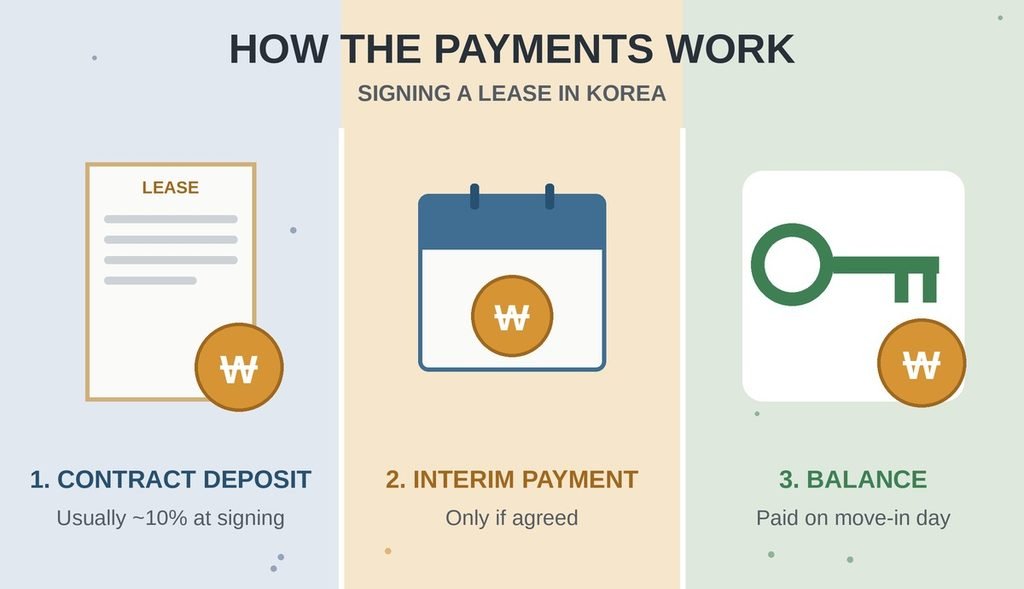
Most leases follow the same sequence. You pay a contract deposit (usually around 10% of the total deposit) on the day you sign, sometimes an interim payment if both sides agree, and the balance on move-in day. Once the contract deposit is paid, backing out usually means losing it, so everything below needs to be checked before money moves, not after.
1. Not Confirming the Landlord Is the Real Owner
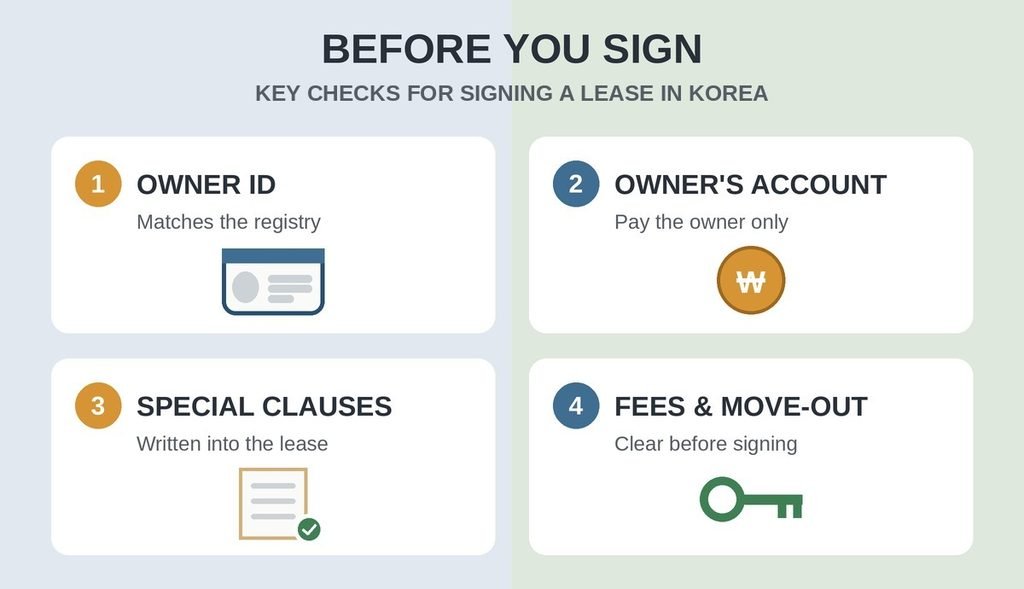
The person sitting across the table should be the owner listed on the property registry. Compare their ID with the registry, which can be viewed through the Internet Registry Office. If someone else is signing on the owner’s behalf, such as a family member or property manager, they should provide proper authorization documents. Skipping this check is how deposits end up with people who had no right to rent the home.
2. Paying the Deposit to the Wrong Account
Your contract deposit, interim payment, and balance should go to a bank account in the registered owner’s name. Not a relative’s account, not a manager’s account, and never cash without a receipt. If the account name doesn’t match the owner, stop and ask why before transferring anything. You’ll need a Korean bank account ready to make these transfers.
3. Signing Without Special Clauses
The standard lease form covers the basics, but your real protection is in the special clauses (teukyak) added at the bottom. Common ones include who pays for major repairs, a promise that the landlord won’t take out new loans before your protection takes effect, the exact deposit return date, and conditions for early termination. If it’s not written in the contract, it’s very hard to enforce later.
4. Misunderstanding the Payment Schedule
Many foreigners assume the contract deposit is refundable if they change their mind. In most cases it isn’t. Signing a lease in Korea is a commitment from the moment that first payment is made. Know exactly how much is due, when, and what happens if either side cancels, before you sign.
5. Ignoring Maintenance Fees and Move-Out Conditions
Monthly maintenance fees can vary widely, and what’s included (internet, water, cleaning, parking) differs by building. Move-out terms matter just as much: restoring the unit to its original condition, cleaning fees, and how damage is assessed. These details decide how much of your deposit actually comes back, which we cover in Getting Your Deposit Back in Korea.
The Bottom Line on Signing a Lease in Korea
Before signing a lease in Korea, confirm the owner, pay only into the owner’s account, write your protections into the special clauses, and understand every payment before it’s due. After you sign, the next step is filing your move-in report and fixed date on move-in day.
If you’d rather have a licensed agent check the registry, verify the landlord, and draft protective clauses for you, reach out through our Contact Us page with your target move-in date. Our fee follows Korea’s legal rate cap, and how it’s calculated is explained in Real Estate Agent Fees in Korea.