Hannam vs Seorae Village is a choice many expat families face when moving to Seoul. Both neighborhoods have long been popular with foreign residents, both offer larger homes than you’ll find in most of the city, and both feel calmer than Seoul’s busiest districts. But daily life looks quite different in each, from the school run to where you spend your weekends.
Here’s how the two compare, and the five differences that matter most for families. If you’re moving without children or prefer a livelier area, our guides to Itaewon vs Haebangchon and Mapo vs Seongsu may be a better fit.
Table of Contents
Hannam vs Seorae Village: The Quick Overview
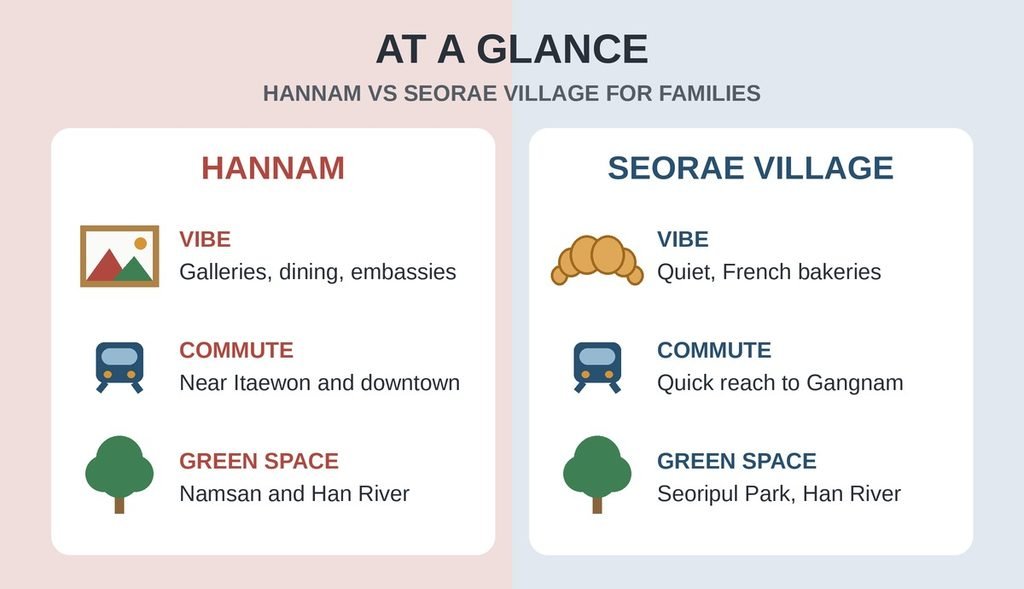
Hannam-dong sits in Yongsan-gu, between Namsan and the Han River, right next to Itaewon. It’s home to many embassies and ambassadors’ residences, art museums and galleries, and some of Seoul’s most exclusive housing. The streets mix quiet hillside residences with a lively dining and design scene.
Seorae Village is in Banpo-dong, Seocho-gu, south of the river. It’s often called Seoul’s French village, because a French international school is located there and many French families settled in the area. Expect bakeries, cafes, tree-lined streets, and a slower, residential pace. For visitor information on both areas, Visit Seoul is a helpful starting point.
1. School Routes
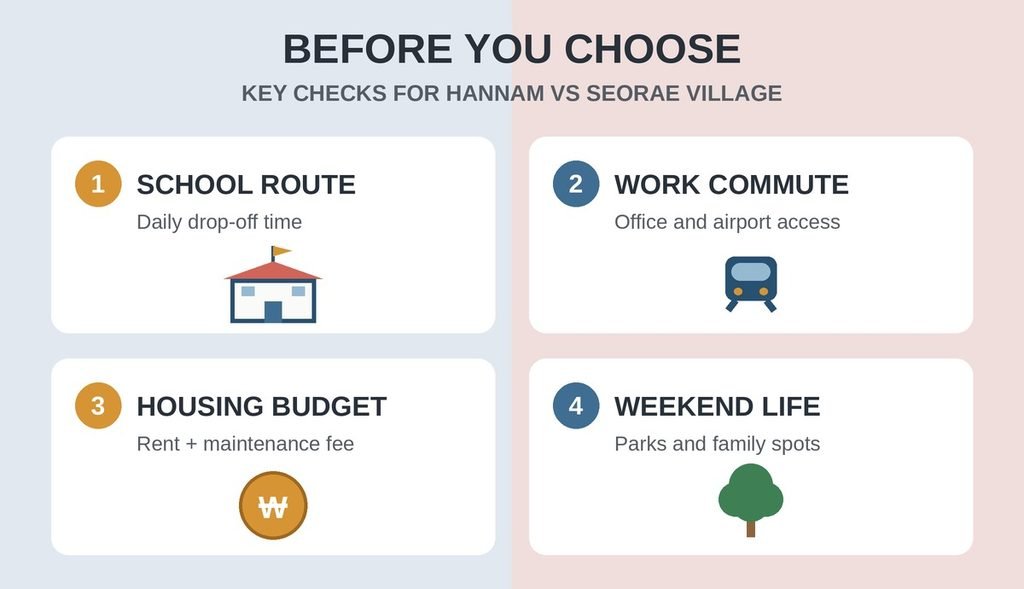
For most families, this decides everything. International schools are spread across Seoul, and a short distance on the map can mean a long ride at rush hour. Before comparing homes, confirm where your children will attend, whether the school runs buses to your area, and how long the morning trip actually takes. Seorae is especially convenient for families at the French school, while Hannam’s central location works for schools in several directions.
2. Work Commute
Hannam is close to central Seoul and Itaewon, making it practical for embassy staff and people working downtown or in Yongsan. Seorae Village sits south of the river, with quick access to Gangnam and the Seoul Express Bus Terminal area. If you work in one of the major Seoul business districts, check the drive or subway time at peak hours, not just on a weekend visit.
3. Housing Types and Costs
In the Hannam vs Seorae Village comparison, housing is where budgets diverge most. Hannam includes luxury apartment complexes and detached houses with some of the highest rents in Korea, alongside older villas and apartments. Seorae Village offers more mid-rise apartments and villas, often with more space for the price. In both areas, compare the full monthly cost, including maintenance fees, as explained in Paying Utility Bills in Korea.
4. Parks and Weekend Life
Hannam families have Namsan’s walking trails nearby and the Han River parks a short trip away. Seorae Village is next to Seoripul Park and Montmartre Park, with Banpo Hangang Park and its fountain bridge close by. Both areas work well for active families, so think about which routine you’d actually enjoy every weekend.
5. Daily Atmosphere
Hannam can feel busier, with restaurants, galleries, and visitors from nearby Itaewon, especially on weekends. Some streets are steep, which matters with a stroller or young children. Seorae Village is quieter and flatter, with a strong neighborhood feel built around its cafes and parks. Visit both on a weekday morning and a Saturday afternoon before deciding.
The Bottom Line on Hannam vs Seorae Village
In Hannam vs Seorae Village, the best choice depends on your school, your workplace, and your budget. Choose Hannam if you want a central location, a lively dining scene, and premium housing options. Choose Seorae Village if you prefer a quieter, flatter neighborhood with parks nearby and easy access to Gangnam.
Family housing in Seoul often involves larger deposits and more detailed contracts, so it pays to review everything in Signing a Lease in Korea before committing. If you’re relocating with your family, reach out through our Contact Us page with your children’s school, workplace, budget, and target move-in date. We’ll shortlist homes that fit your daily routine. Our fee follows Korea’s legal rate cap, explained in Real Estate Agent Fees in Korea.