Breaking a lease in Korea is more common than many expats expect. Jobs change, families grow, and plans shift. But Korean leases are built around a fixed term and a large deposit, so leaving early isn’t as simple as giving notice and handing back the keys. Handled well, it usually costs little more than an agent fee. Handled badly, it can leave your deposit stuck for months.
Here’s how an early move-out usually works, and the five mistakes that cost tenants the most. If your lease is close to ending anyway, our guide to Lease Renewal in Korea may be the better place to start.
Table of Contents
How Breaking a Lease in Korea Usually Works
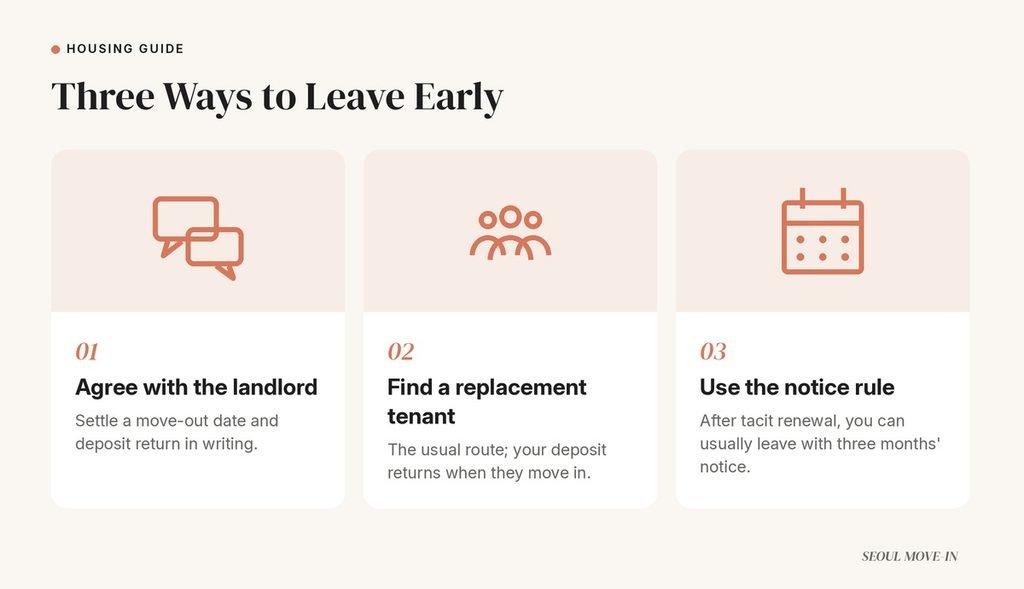
Most residential leases in Korea have a fixed term, usually two years. In general, a tenant can’t end that term early on their own unless the contract allows it or the landlord agrees. In practice, there are three common routes.
Agree with the landlord. Some landlords will let you leave early if you give enough notice, especially when the rental market is active. Put the move-out date and the deposit return date in writing.
Find a replacement tenant. This is the most common route. A new tenant signs a lease with the landlord, and your deposit is returned when they pay theirs. The landlord usually has the final say on who the new tenant is.
Use the three-month notice rule. After a lease has been tacitly renewed, or after you’ve used your renewal request right, tenants can generally end the lease by giving the landlord three months’ notice.
The English translation of the Housing Lease Protection Act is available through the Korea Law Translation Center. This article is general information, not legal advice.
1. Talking to the Landlord Before Checking Your Contract
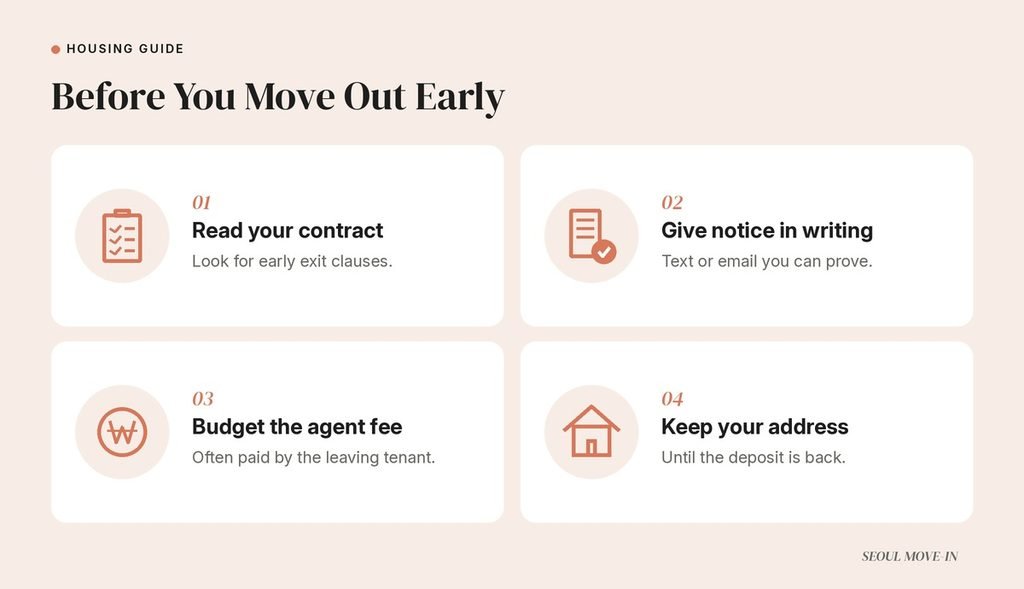
Some leases already include special clauses about leaving early, such as how much notice you must give or who pays the agent fee for the next tenant. If you call the landlord before checking, you may agree to terms that are worse than what your contract says. Read the special clauses section first, so you know exactly where you stand before the conversation starts.
2. Telling the Landlord Only by Phone
A quick phone call saying “I need to move out early” is easy to misunderstand or forget. When breaking a lease in Korea, send your notice by text message, email, or certified mail, include your planned move-out date, and keep a copy. If the three-month notice rule applies, the period usually starts when the landlord receives your notice.
3. Forgetting the Agent Fee for the Next Tenant
When a replacement tenant is found, the leaving tenant is often expected to pay the agent fee for the new tenant’s contract. This is a common practice rather than a fixed rule, and it’s one of the most frequent costs of breaking a lease in Korea, so discuss it with the landlord early. The fee follows Korea’s legal rate cap, as explained in Real Estate Agent Fees in Korea.
4. Moving Your Address Before the Deposit Is Back
Your deposit protection depends on your registered address and fixed date. If you move out and change your address before the deposit is back in your account, you can lose your priority. Keep your address at the property until you’re paid, or ask about a lease registration order if you have to leave first. Our guide to Getting Your Deposit Back in Korea explains both options.
5. Letting the Home Slip While You Wait
Until you leave, new tenants will come to view the home, and your landlord will check its condition on move-out day. Keep it clean and easy to show, fix any small damage you caused, and take photos when you hand back the keys. A home that shows well rents faster, and photos make it much easier to dispute unfair deductions.
The Bottom Line on Breaking a Lease in Korea
Breaking a lease in Korea is usually manageable when you plan ahead. Check your contract, give notice in writing, agree on dates with the landlord, budget for the agent fee, and keep your address registered until the deposit is returned. The earlier you start, the more time there is to find the right replacement tenant.
If you need to leave early, reach out through our Contact Us page with your current lease details and planned move-out date. We can help find a replacement tenant, coordinate with your landlord, and line up your next home using the steps in How to Find an Apartment in Seoul.