Understanding the types of housing in Korea is the first step to finding the right home. Listings use terms like one-room, officetel, villa, and apartment, and each one comes with its own price range, building rules, and risks. Many newcomers compare only the monthly rent and end up in a place that doesn’t suit their budget, their commute, or their lifestyle.
Here’s what each type really means, and the five mistakes to avoid when choosing between them. Once you know what you’re looking for, our guide on how to find an apartment in Seoul explains how to search.
Table of Contents
The Main Types of Housing in Korea
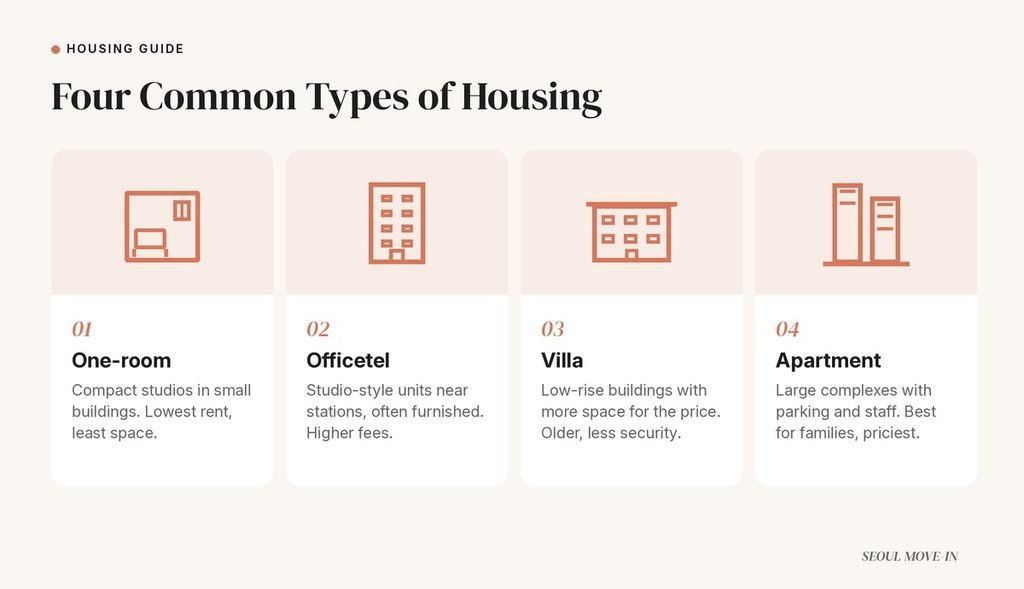
One-room. A compact studio, usually in a small multi-unit building. It typically has a bed area, a small kitchen, and a bathroom in one space. It’s the cheapest option and popular with students and single workers, but space and soundproofing are limited.
Officetel. A studio-style unit in a mixed-use building, often near subway stations. Many come furnished, with security and convenient locations, but maintenance fees are usually higher. Our guide to Renting an Officetel or Studio in Seoul covers them in detail.
Villa. In Korea, a villa means a low-rise residential building, usually four or five floors, not a luxury house. Villas often offer more space for the price, but they tend to be older, with fewer amenities and limited parking.
Apartment. Large complexes managed by a management office, with parking, security, and shared facilities. They’re the most popular choice for families and usually the most expensive, with larger deposits.
1. Comparing Rent Without the Maintenance Fee
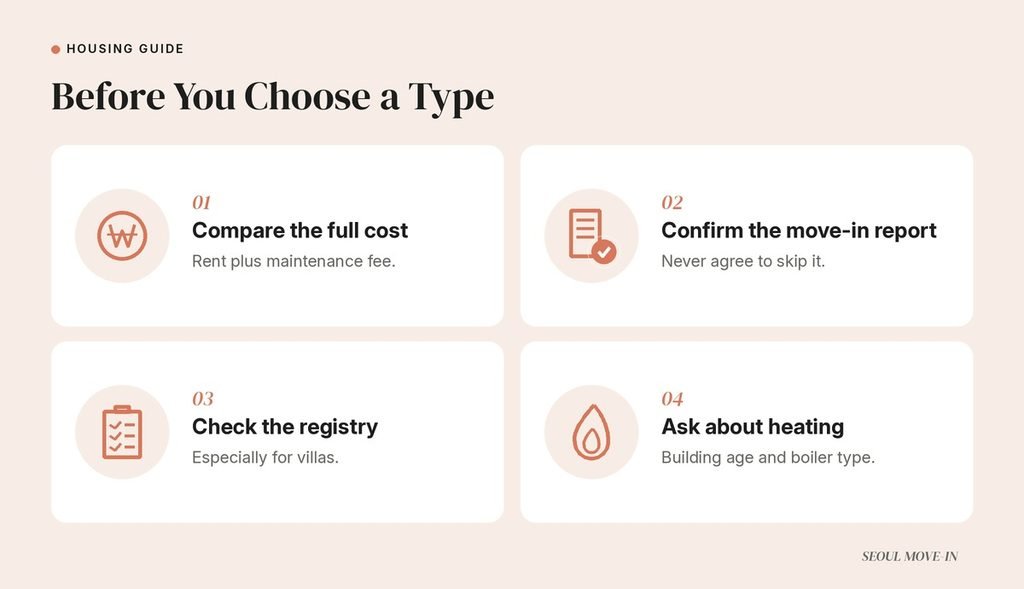
Maintenance fees vary widely between types of housing in Korea. Officetels often have higher fees, while some one-rooms and villas charge very little. Always add the fee to the rent and ask what it includes before comparing. Our guide to Paying Utility Bills in Korea explains what’s usually billed separately.
2. Agreeing to Skip the Move-In Report
Some officetel landlords ask tenants not to register their address there. Don’t agree. Without a move-in report and fixed date, your deposit may not be protected if something goes wrong. Our guide to the move-in report and fixed date explains why this step matters.
3. Skipping the Registry Check on Villas
In recent years, many reported deposit fraud cases in Korea have involved villas, often where the deposit was close to or above the property’s real value. Check the property registry through the Internet Registry Office, compare the deposit with nearby sale prices, and look for existing mortgages. The warning signs in Red Flags When Renting in Seoul apply to every type of home.
4. Ignoring Heating and Building Age
Korean winters are cold, and heating costs depend heavily on the building. Older villas and one-rooms can have poor insulation and individual gas boilers that drive up winter bills, while many newer apartments are more efficient. Ask how the unit is heated and what tenants typically pay in January.
5. Choosing a Type That Doesn’t Match Your Stay
A one-room or officetel may be perfect for a single person staying a year or two, but a family will quickly outgrow it. Apartments offer more space and stability, but larger deposits can be hard to commit to for a short stay. Match the type to your household size, your budget, and how long you plan to stay. For stays under a year, see Short-Term Rentals in Seoul.
The Bottom Line on Types of Housing in Korea
The types of housing in Korea each fit a different life. One-rooms are affordable for singles, officetels offer convenience near stations, villas give more space for the price, and apartments suit families who want stability and amenities. Whatever you choose, compare the full monthly cost, insist on your move-in report, check the registry, and ask about heating.
If you’re not sure which type fits your situation, reach out through our Contact Us page with your budget, household size, and move-in date. We’ll explain the options in your price range and shortlist homes that match.