
Real estate agent fees in Korea surprise almost every foreign renter. Unlike in many countries, the fee isn’t whatever the agent decides to charge, and it isn’t a flat rate either. It’s regulated by law, and understanding how it works is the easiest way to avoid paying more than you should.
Below are the five costly surprises we see with real estate agent fees, and the questions that keep you protected. They pair well with our guides on Jeonse vs Wolse, red flags when renting in Seoul, and the alien registration card you’ll need before you sign.
Table of Contents
How Real Estate Agent Fees Work in Korea
In Korea, the brokerage fee (중개보수) is capped by law. The government sets a maximum rate table based on the type of transaction and the transaction amount, and an agent may charge up to that cap, never above it. Generally, each side of a deal pays its own fee: the landlord pays their share and the tenant pays theirs. The rules sit in the Licensed Real Estate Agents Act and related local ordinances.
1. Assuming the Fee Is Whatever You’re Quoted
Because there’s a legal ceiling, a quote is a starting point, not a fact. An agent can charge less than the cap by agreement, but never more. A quote above the cap is a reason to ask questions, not to pay.
2. Not Knowing What the Cap Depends On
The cap depends on the type of transaction, the amount band your deal falls into, and local rules set by each city or province. That means the exact table can differ by region and change over time. Any number you read online, including old forum posts, may not apply to your lease. The only reliable way to check real estate agent fees is against the current table for your city.
3. Overlooking How Monthly Rent Is Counted
For a Wolse lease, the fee isn’t calculated on the deposit alone. The law generally converts the monthly rent into an equivalent amount and adds it to the deposit to reach the transaction amount that the rate applies to. Two leases with the same deposit but different monthly rent can therefore produce different fees. If you’re still weighing structures, our Jeonse vs Wolse guide shows how the two compare.
4. Forgetting VAT and Actual Expenses
A quoted fee may or may not include VAT, depending on the agent’s tax status, and certain out-of-pocket costs (실비) are separate from the fee. Ask upfront whether the figure is VAT-inclusive and whether anything else could be added. Clear answers here are the mark of a professional.
5. Paying Without a Breakdown or Receipt
Unless agreed otherwise, the fee is generally due only once the transaction is completed, not for viewings or consultations. Before paying, ask for a written breakdown showing the transaction amount, the rate applied, and the resulting fee, and keep the receipt. Licensed offices must also display their fee table, so you can check it yourself. Real estate agent fees should never be a mystery number.
Three Questions to Ask About Real Estate Agent Fees
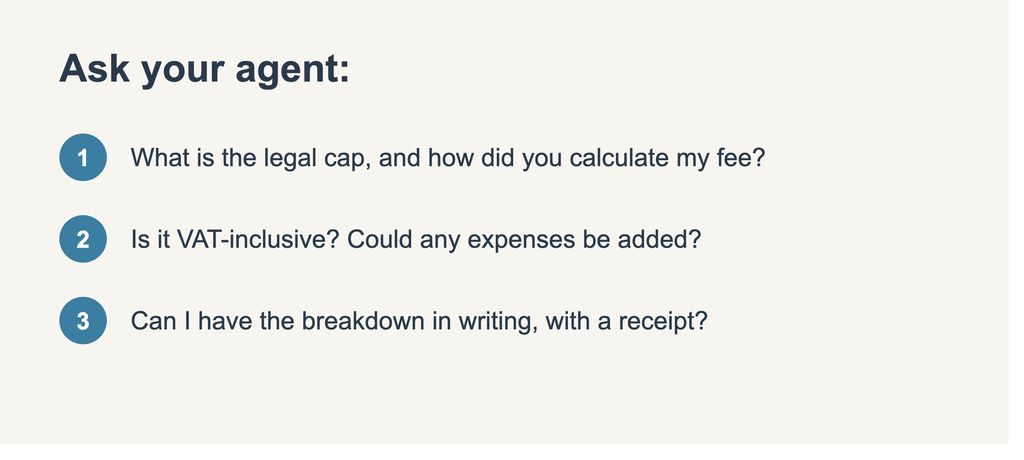
- What is the legal cap for my transaction, and how did you calculate my fee?
- Is the figure VAT-inclusive, and could any actual expenses be added?
- Can I have the breakdown in writing, with a receipt?
A good agent answers all three without hesitation. If the answers are vague, that’s your signal to slow down.
The Bottom Line on Real Estate Agent Fees
The rules exist so you know what you’re paying and why. You don’t need to memorize the rate table; you need an agent who is willing to walk you through it, every time. That’s how we work with every client: the calculation is explained before anything is signed.
If you’d like a clear explanation of how real estate agent fees would apply to your own deposit and rent, reach out through our Contact Us page with your budget and move-in date. We’ll show you the calculation before you commit to anything.