
If you’re staying in Korea for more than 90 days, the alien registration card is the first document that unlocks everything else: a lease you can legally protect, a bank account, a phone plan. Most newcomers only learn this after they’ve already signed a contract or booked a flight.
Below are the seven costly mistakes we see foreign residents make with the alien registration card, and how a licensed agent keeps them off your timeline. It pairs closely with our guides on Jeonse vs Wolse and red flags when renting in Seoul.
Table of Contents
What Is the Alien Registration Card?
The alien registration card (외국인등록증, often shortened to ARC) is the ID issued by Korean immigration to foreign nationals staying longer than 90 days. Banks, phone carriers, and landlords treat it as your main proof of identity. Tourists on short stays don’t get one, but anyone relocating, studying, or working in Korea will need it.
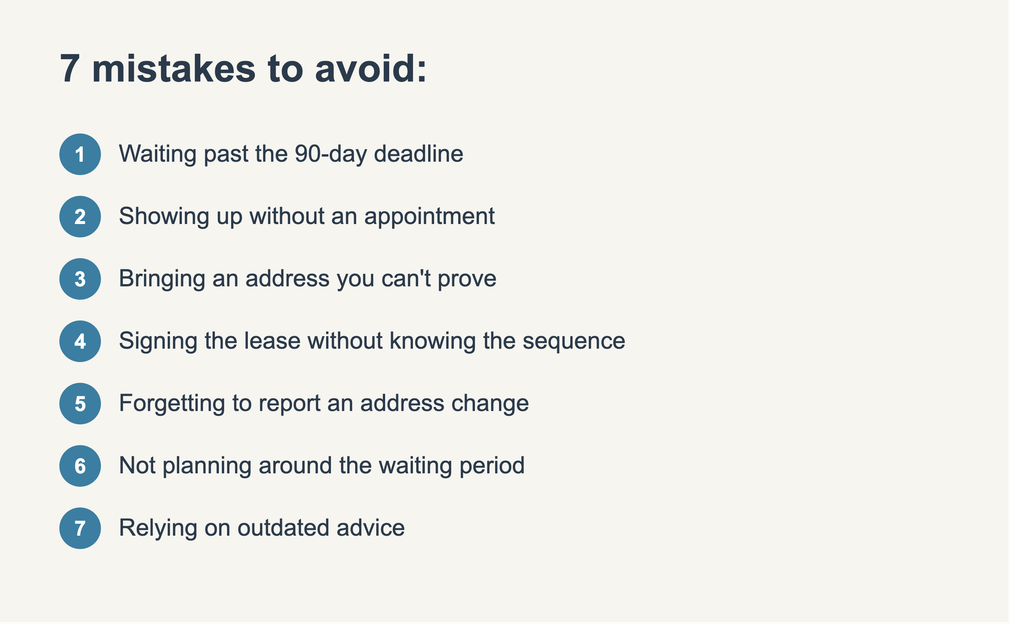
1. Waiting Past the 90-Day Deadline
Foreign nationals staying longer than 90 days are generally required to register within 90 days of arrival. Missing it can mean fines and complications with your visa status. Treat your first week in Seoul as the time to start, not the last month. Starting your alien registration card process early also gives you room if a document turns out to be missing.
2. Showing Up Without an Appointment
Immigration offices usually run on reservations booked through HiKorea, the government’s official portal. Walk-ins are often turned away, and popular time slots in Seoul can be booked out for days. Book as soon as you know your address.
3. Bringing an Address You Can’t Prove
Your application typically needs proof of where you live, most commonly a lease contract or a written confirmation from your landlord. That creates a chicken-and-egg problem: you need a lease to get the alien registration card, while some landlords ask to see the card before signing. A licensed agent knows how to sequence this, and which documents your landlord can provide ahead of time. Before you sign anything, read our checklist of red flags when renting in Seoul.
4. Signing the Lease Without Knowing the Sequence
Your lease and your alien registration card protect each other. In most cases, reporting your new address after you register is what secures your deposit’s legal priority, the same protection we explain in Jeonse vs Wolse. Sign first and plan later, and you may leave a gap where your deposit isn’t fully protected.
5. Forgetting to Report an Address Change
After you move, foreign residents are generally required to report the new address within 15 days, at the immigration office or a local community center. Skipping this can cost you fines and weaken your deposit protection. Put the deadline in your calendar the day you receive your keys.
6. Not Planning Around the Waiting Period
The card usually arrives a few weeks after you apply. During that time, banks and phone carriers may limit what they can offer you. Some accept alternative documents, but policies vary by branch. Plan your first weeks accordingly: keep a travel card, a temporary phone option, and copies of your application receipt.
7. Relying on Outdated Advice
Forms, fees, and document requirements change, and a forum post from two years ago may already be wrong. Always confirm the current rules on HiKorea or directly with your immigration office, and with your agent, who deals with these steps for clients every week.
The Bottom Line on the Alien Registration Card
None of this is hard once you know the order: register early, prove your address, protect your deposit, and report every move. The trouble is that these steps sit between three different offices, and a small mistake in the order can cost you weeks. That’s where a licensed agent saves you time: not just finding a home, but making sure your lease and your alien registration card work together from day one.
If you’re planning a move and want help sequencing it, reach out through our Contact Us page with your target move-in date and visa type. Happy to walk you through it.
[…] the five mistakes we see most often, and how to avoid them. This pairs well with our guides on the alien registration card and red flags when renting in Seoul, since housing and banking usually happen in the same first few […]