Getting your deposit back in Korea should be simple: you move out, the landlord returns your money. In practice, the process has enough steps and enough room for disputes that we walk almost every client through it before their move-in date, not just their move-out.
Here’s how the process actually works, and the five mistakes that most often delay or shrink a refund. It builds on our guides to red flags when renting in Seoul and Jeonse vs Wolse.
Table of Contents
How Deposit Return Actually Works
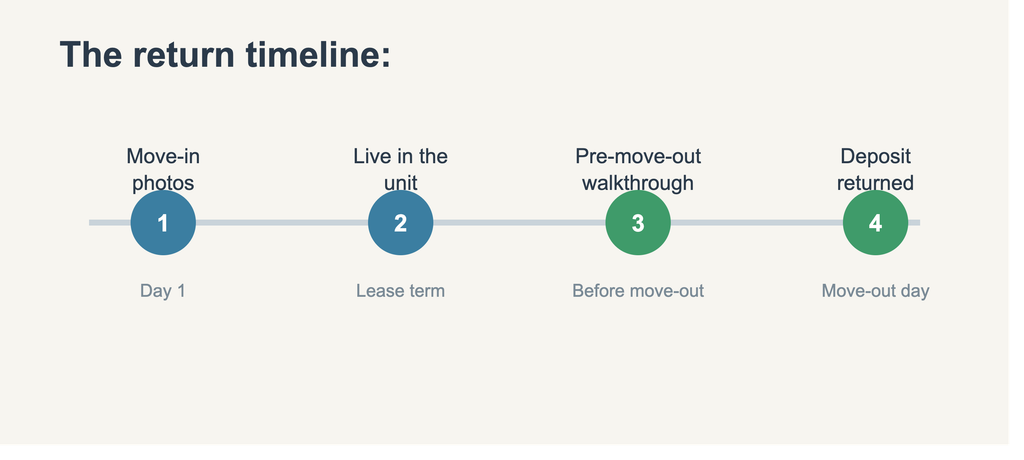
In principle, your landlord returns the full deposit on your move-out date, minus any legitimate deductions for unpaid rent, unpaid utilities, or damage beyond normal wear and tear. In practice, timing and documentation drive most disputes, which is why getting your deposit back in Korea smoothly usually starts with decisions you made when you moved in, not just how you move out.
1. Not Documenting the Move-In Condition
If you never photographed the unit’s condition on day one, as we recommend in our red flags checklist, you have no baseline to compare against at move-out. Landlords sometimes attribute pre-existing wear to the outgoing tenant, and without dated photos, it becomes your word against theirs. Getting your deposit back in Korea without documentation is possible, but it’s a weaker negotiating position.
2. Skipping the Pre-Move-Out Walkthrough
Many landlords or agents will do a walkthrough shortly before your move-out date to flag any issues while there’s still time to address them, such as a cleaning fee or a repair you could handle yourself more cheaply than a landlord’s contractor would. Skipping this step means problems surface for the first time on move-out day, when you have the least leverage to negotiate.
3. Confusing Normal Wear With Damage
Minor scuffs, faded paint, or worn flooring from ordinary living are generally not deductible; that’s the legal distinction between normal wear and tear and damage. Getting your deposit back in Korea in full often comes down to this exact line, and it’s worth knowing before you argue over a specific deduction. When in doubt, ask your agent whether a claimed deduction is standard practice or a stretch.
4. Not Confirming the Refund Timing in Writing
Deposit refunds are supposed to happen at move-out, but landlords sometimes ask to delay payment until they’ve secured a new tenant, especially in a slow rental market. This isn’t automatically illegal, but it should be agreed to explicitly, ideally in writing, rather than assumed. If your original deposit was tied to a Jeonse arrangement, delays matter even more given the size of the sum involved, and for Jeonse tenants specifically, HUG (Korea Housing & Urban Guarantee Corporation) offers deposit guarantee insurance worth researching before you sign.
5. Assuming Key Money Works the Same Way
If you’re a commercial tenant who also paid key money when you moved in, remember that key money isn’t refundable the way your deposit is. Don’t expect a landlord dispute over your deposit to somehow recover key money too; they’re entirely separate conversations with different people.
The Bottom Line on Getting Your Deposit Back in Korea
The single biggest factor isn’t anything that happens on move-out day, it’s whether you documented the move-in condition properly months or years earlier. Everything else is a negotiation that goes more smoothly with a paper trail behind it.
If you’re moving out soon and want help navigating the walkthrough or a disputed deduction, or you’re moving in and want to set yourself up properly from day one, reach out through our Contact Us page. Happy to help either way.