Short-term rentals in Seoul are often the smartest first step for newcomers. Most standard leases in Korea run for one or two years and require a sizable deposit, which is hard to commit to before you’ve seen the neighborhoods, started your job, or received your alien registration card. A stay of one to six months gives you time to settle in and choose a long-term home with confidence.
Here are the main options, and the five mistakes that turn a flexible stay into an expensive one. When you’re ready for something longer, our guide to Renting an Officetel or Studio in Seoul explains the next step.
Table of Contents
Common Types of Short-Term Rentals in Seoul
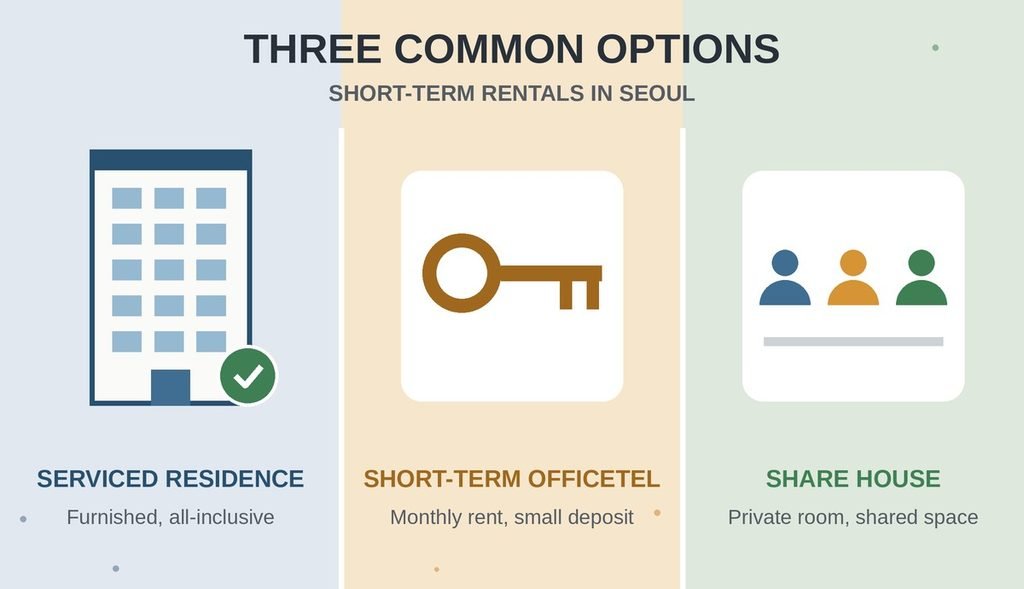
Serviced residences are furnished apartments with hotel-style services such as cleaning, utilities, and internet included. They’re the most convenient option and are popular with business travelers and corporate transfers, but they cost the most per month.
Short-term officetels are studio units leased by the month, usually furnished, with a much smaller deposit than a standard lease. They offer more privacy and a regular apartment feel at a lower price than serviced residences.
Share houses give you a private bedroom with a shared kitchen and living area. They’re the most affordable choice and a good way to meet people, though space and privacy are limited.
1. Booking a Listing That Isn’t Legally Registered
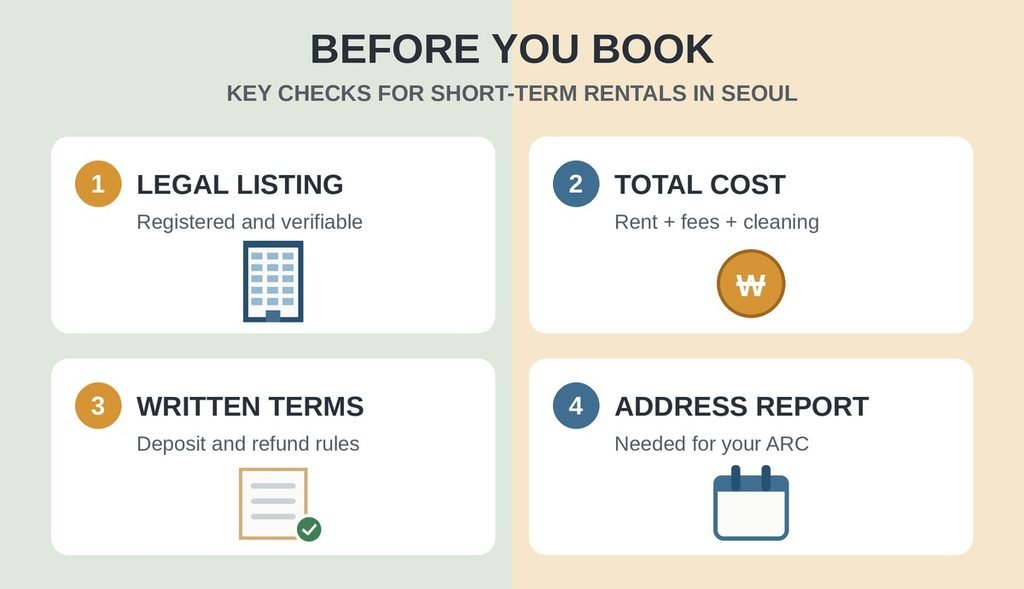
Not every listing you find online is a legal rental. Some short-term platforms include units that aren’t registered for this kind of use, and guests can be asked to leave if the building management or authorities step in. Choose operators that clearly show their business details, or ask a licensed agent to confirm the unit and the person renting it before you pay.
2. Comparing Rent Without the Full Cost
The monthly rent is only part of the price. Some places add maintenance fees, utilities, internet, cleaning fees, and platform service charges, while others include everything. Ask for a written breakdown and compare the total monthly cost. Our guide to Paying Utility Bills in Korea explains what’s usually billed separately.
3. Paying Without Clear Written Terms
Even short-term rentals in Seoul usually involve a deposit. Before transferring anything, get written terms that cover the deposit amount, when and how it’s returned, cleaning or damage deductions, and what happens if you leave early. Pay into an account in the name of the operator or owner, never in cash without a receipt. The same principles apply as in Signing a Lease in Korea.
4. Forgetting You Need an Address for Your ARC
To apply for or update your alien registration card, you need to report a place of residence. Some short-term operators provide documents for this, and some don’t. Ask before booking whether they can issue proof of residence, such as a lease or accommodation confirmation, accepted by the immigration office. Details on residence reporting are available through Hi Korea.
5. Staying Too Long Without a Plan
Short-term rentals in Seoul cost more per month than a standard lease, and the gap grows the longer you stay. Use your first few months to visit neighborhoods, compare commutes, and prepare your documents and Korean bank account. Then move into a long-term home before the extra cost adds up.
The Bottom Line on Short-Term Rentals in Seoul
Short-term rentals in Seoul are a practical bridge between arriving and settling in. Choose a legal, verifiable listing, compare the full monthly cost, get every term in writing, and confirm you can use the address for your ARC. Then use that time to find the right long-term home.
If you’d like help with both, reach out through our Contact Us page with your arrival date, budget, and preferred area. We can suggest short-term options to start with and line up long-term homes to view while you’re here, so your move happens in one smooth sequence.