Lease renewal in Korea catches many expat tenants off guard. Your contract may run for two years, but the decisions that shape what happens next are made months before it ends. Miss a deadline, and you could face a rent increase you didn’t expect, or a move you didn’t plan for. Know the rules, and you can usually stay on with far more certainty than most newcomers realize.
Here’s how residential renewal works, and the five mistakes that cost tenants the most. If you haven’t set up your basic protections yet, start with our guide to the move-in report and fixed date.
Table of Contents
How Lease Renewal in Korea Works
Under Korea’s Housing Lease Protection Act, most residential leases are treated as lasting at least two years. Near the end of that term, tenants generally have two paths to staying on.
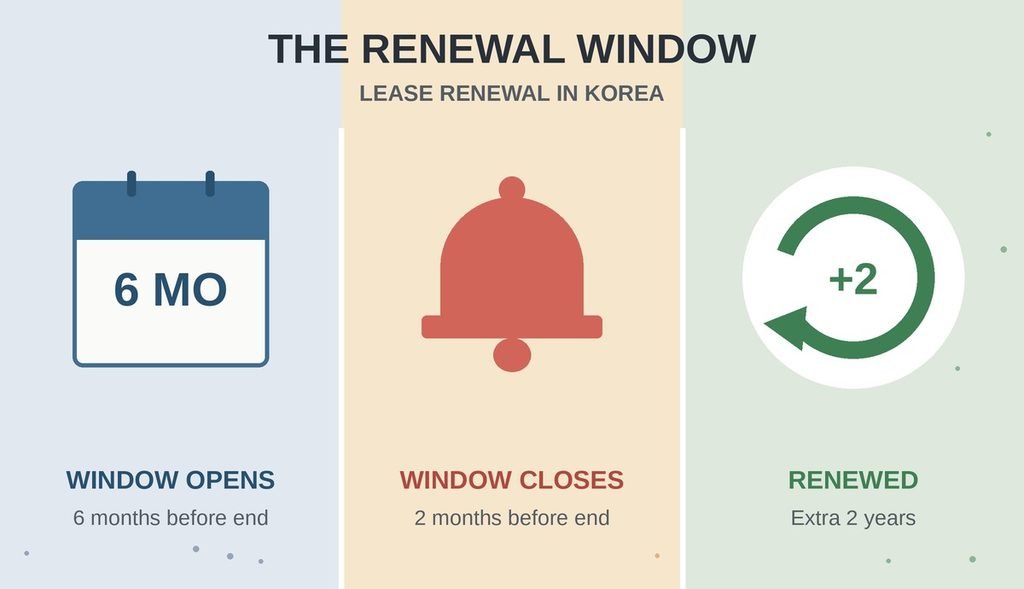
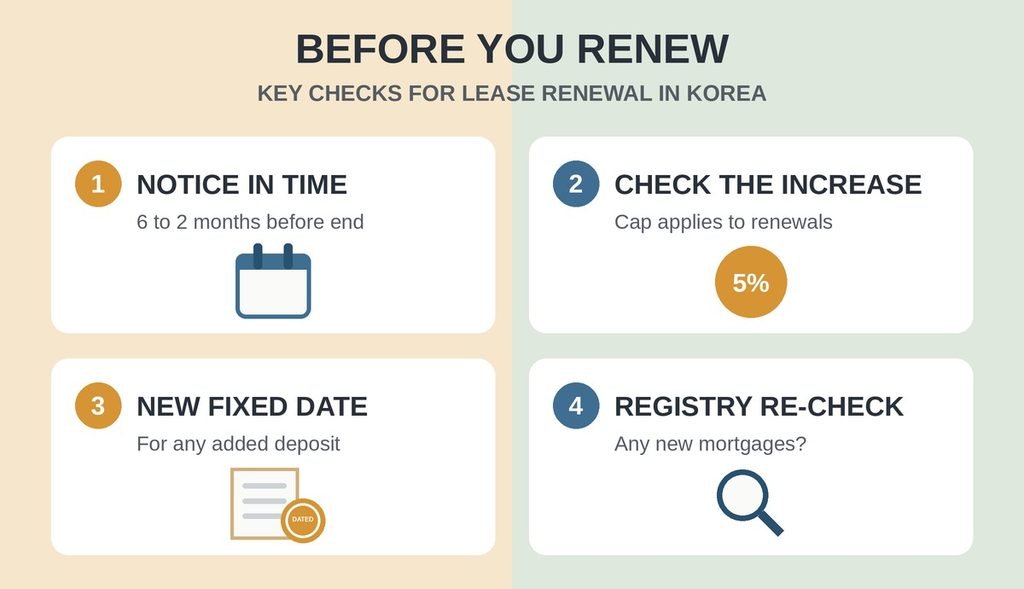
The renewal request right. Tenants can usually ask to renew once, for an additional two years, by notifying the landlord between six months and two months before the lease ends. When this right is used, the rent or deposit increase is generally capped at 5%. The landlord can refuse only in limited situations, such as when the landlord or certain close family members will actually move in, or when the tenant has seriously fallen behind on rent.
Tacit renewal. If neither side gives notice within that same window, the lease is typically renewed automatically on the same terms for another two years. In this case, the tenant can usually end the lease with three months’ notice.
The English translation of the law is available through the Korea Law Translation Center. This article is general information, not legal advice, and details can depend on your specific contract.
1. Missing the Notice Window
The window runs from six months to two months before the lease ends, and timing matters. Send your renewal request in a way you can prove later, such as a text message, email, or certified mail, and keep a copy. A verbal “we’ll probably stay” over the phone is easy to dispute.
2. Agreeing to an Increase Without Checking the Rules
When you use the renewal request right, the increase is generally limited to 5%. But if you sign an entirely new contract instead, that cap may not apply in the same way. Before agreeing to any number, confirm whether you’re exercising your renewal right or negotiating a new lease. The difference can matter a lot on a large deposit, especially for jeonse leases.
3. Forgetting a New Fixed Date for Added Deposit
If your deposit goes up at renewal, the extra amount needs its own protection. Get a fixed date on the renewed contract or the amendment showing the increase, just as you did when you first moved in. Without it, the added portion may not have the same priority as your original deposit.
4. Moving Out Without Proper Notice After Tacit Renewal
Tacit renewal gives tenants flexibility, but not instant exit. You generally need to give the landlord three months’ notice before leaving, and the deposit is returned after that period ends. Plan your move-out date with that in mind, and follow the steps in Getting Your Deposit Back in Korea.
5. Renewing Without Re-Checking the Registry
A lot can change in two years. The landlord may have taken out a new mortgage, or the property may have changed hands. Before renewing, especially if you’re adding to your deposit, check the property registry again. The same warning signs covered in Red Flags When Renting in Seoul still apply.
The Bottom Line on Lease Renewal in Korea
Lease renewal in Korea works in your favor when you act early. Send notice within the six-to-two-month window, confirm whether the 5% cap applies, protect any added deposit with a new fixed date, and re-check the registry before signing anything. If you plan to leave instead, give enough notice to get your deposit back on time.
If your lease is ending in the next few months and you’re not sure which option fits, reach out through our Contact Us page with your contract end date and current terms. We’ll help you review your renewal options, or find your next home if moving makes more sense. Renewal paperwork follows the same basics as Signing a Lease in Korea.