Trying to find an apartment in Seoul can feel overwhelming at first. Listings move fast, most apps are in Korean, prices are written in a format that confuses almost every newcomer, and some of the best-looking deals turn out not to exist. Once you understand how the market works, though, the process becomes much more manageable.
Here’s where Seoul listings come from, how to read them, and the five mistakes that waste the most time and money. If you’re not sure which type of lease fits you, start with our guide to Jeonse vs. Wolse in Korea.
Table of Contents
Where to Find an Apartment in Seoul
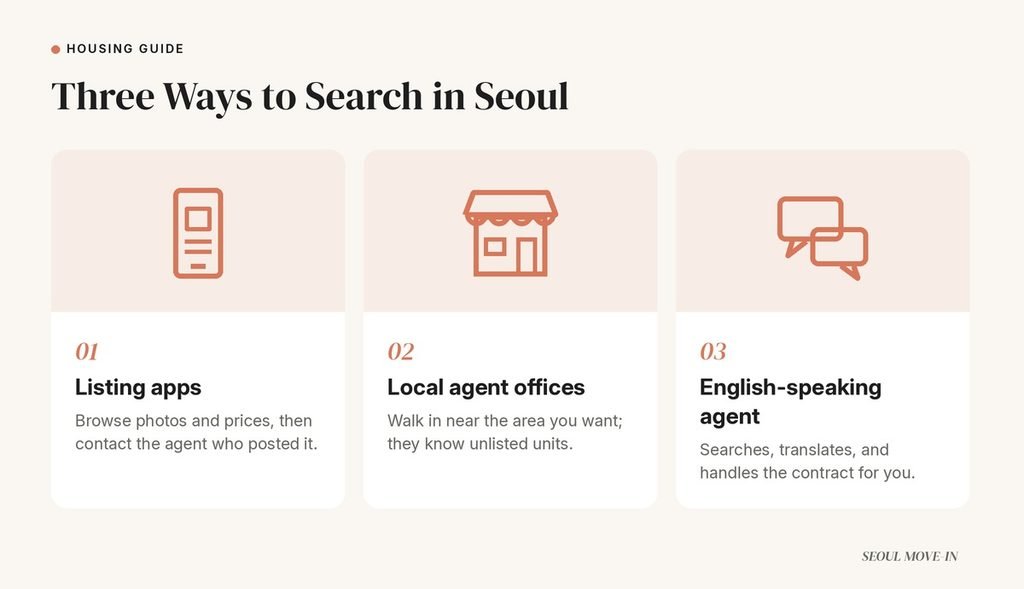
Most rentals in Seoul are found in one of three ways.
Listing apps. Platforms such as Naver Real Estate, Zigbang, and Dabang show thousands of units with photos, prices, and maps. Most listings are posted by licensed agents, so contacting a listing usually means contacting the agent who posted it.
Local agent offices. Every neighborhood has small real estate offices. Walking in near the area you want is still one of the most effective ways to search, since agents often know units that aren’t listed online yet.
English-speaking agents. If you don’t speak Korean or want someone to handle the whole process, an agent who works with foreign clients can search across offices, arrange viewings, translate, and manage the contract.
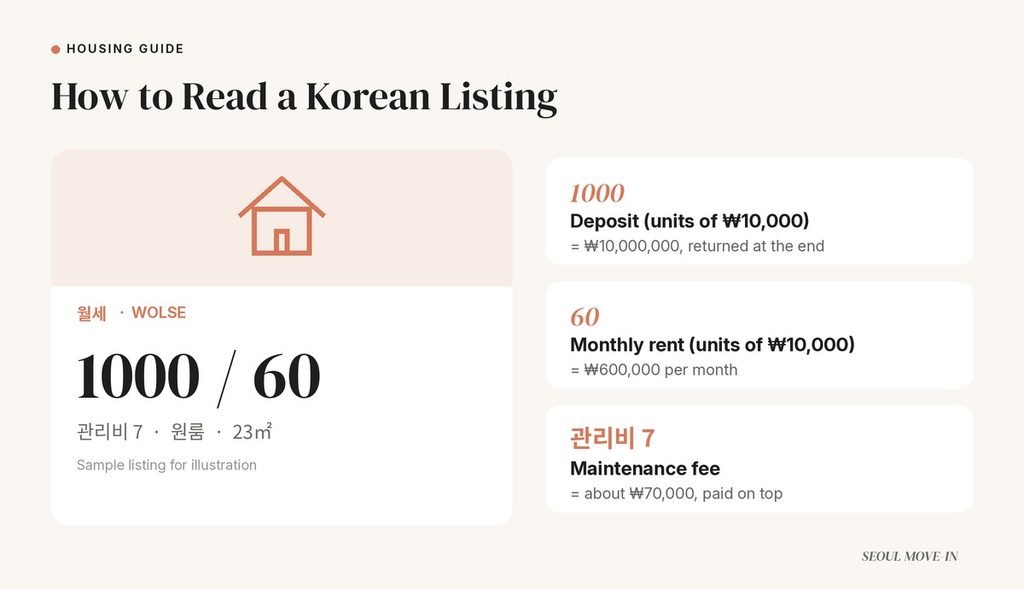
Korean listings use a short format. A monthly rent listing written as 1000 / 60 means a deposit of 10,000,000 won and monthly rent of 600,000 won, because prices are shown in units of 10,000 won. A jeonse listing usually shows a single deposit amount. The maintenance fee is typically listed separately and paid on top of rent.
1. Trusting Every Listing You See
Some listings are posted as bait: the price looks unusually low, and when you call, the unit is “just rented” but there’s another one you might like. If a deal looks far better than everything around it, it probably isn’t available. Ask for the exact address and building name before visiting, and compare it with similar units in the area.
2. Misreading the Price
Because prices are written in units of 10,000 won, it’s easy to misjudge the real cost. Always convert the deposit and rent into full amounts, add the maintenance fee, and ask what that fee includes. Our guide to Paying Utility Bills in Korea explains what’s usually billed separately.
3. Starting Too Early or Too Late
Good units in Seoul often rent within days, so searching three months ahead rarely works. Most tenants begin seriously viewing about four to six weeks before their move-in date. Have your documents, budget, and preferred areas ready before you start, so you can decide quickly when the right place appears.
4. Paying a Holding Deposit Too Quickly
When you find a place you like, you may be asked for a small holding deposit to reserve it. In many cases, this money isn’t returned if you change your mind. Before paying anything, confirm the owner on the property registry, check existing mortgages, and make sure the account belongs to the registered owner. The warning signs in Red Flags When Renting in Seoul still apply at this stage.
5. Viewing Without Checking the Basics
A quick viewing can hide real problems. Check water pressure, signs of mold or leaks, window direction and sunlight, noise from the street, and whether the heating works. Ask about parking, trash disposal, and move-out conditions. Take photos and notes, because after five or six viewings, units start to blur together.
The Bottom Line on How to Find an Apartment in Seoul
To find an apartment in Seoul, use apps to understand the market, visit local offices for real options, read every price carefully, and never pay a holding deposit before checking the owner and the registry. Searching four to six weeks ahead, with your budget and documents ready, gives you the best chance of securing a good unit.
If you’d rather have a licensed agent search for you, reach out through our Contact Us page with your budget, preferred area, and move-in date. We’ll filter out bait listings, arrange viewings, and walk you through Signing a Lease in Korea. Our fee follows Korea’s legal rate cap, explained in Real Estate Agent Fees in Korea.