Choosing a cafe location in Seoul is one of the biggest decisions a new owner makes, and one of the hardest to undo. Seoul has one of the most competitive café scenes in the world, so a good concept in the wrong space can struggle, while an ordinary concept in the right space can thrive. Before becoming a licensed real estate agent, I spent about three years working as a barista and café manager, and most of the problems I saw started with the space, not the coffee.
Here’s what a café space in Seoul actually needs, and the five mistakes that cost new owners the most. For the general basics of shop leases, see our guide to Renting Retail Space in Seoul.
Table of Contents
What a Cafe Location in Seoul Needs
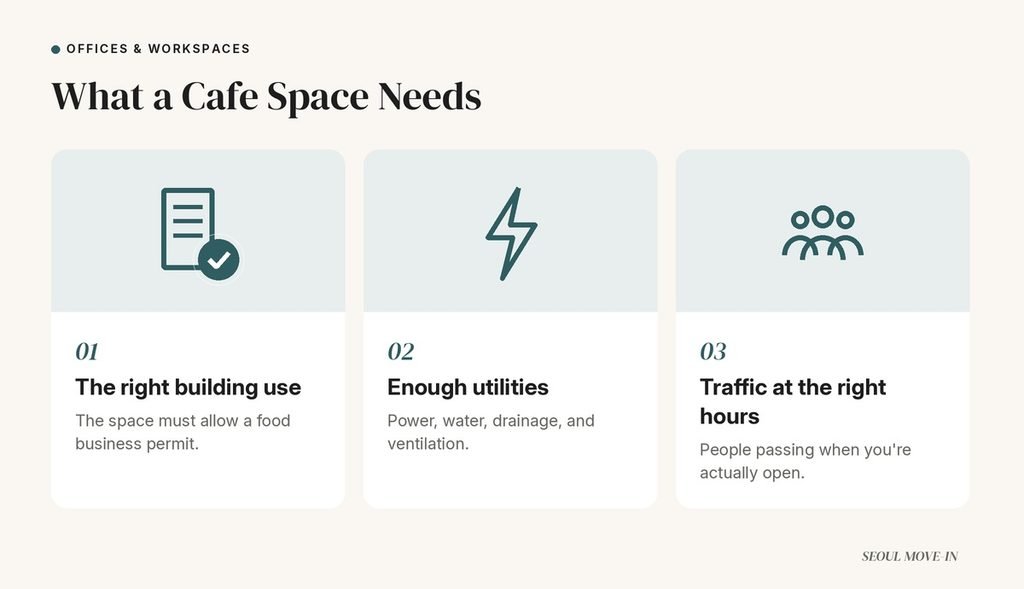
Three things matter before design, menu, or branding.
The right building use. A café usually operates as a food service business that must be reported to the district office before opening. The building’s registered use has to allow it, and the space shouldn’t be listed as a violating structure.
Enough utilities. Espresso machines, grinders, ice makers, and ovens draw a lot of power, and you’ll need proper water supply, drainage, and ventilation.
Traffic at the right hours. Busy streets aren’t enough. What matters is how many people pass during the hours your café is actually open.
1. Signing Before Checking the Building Register
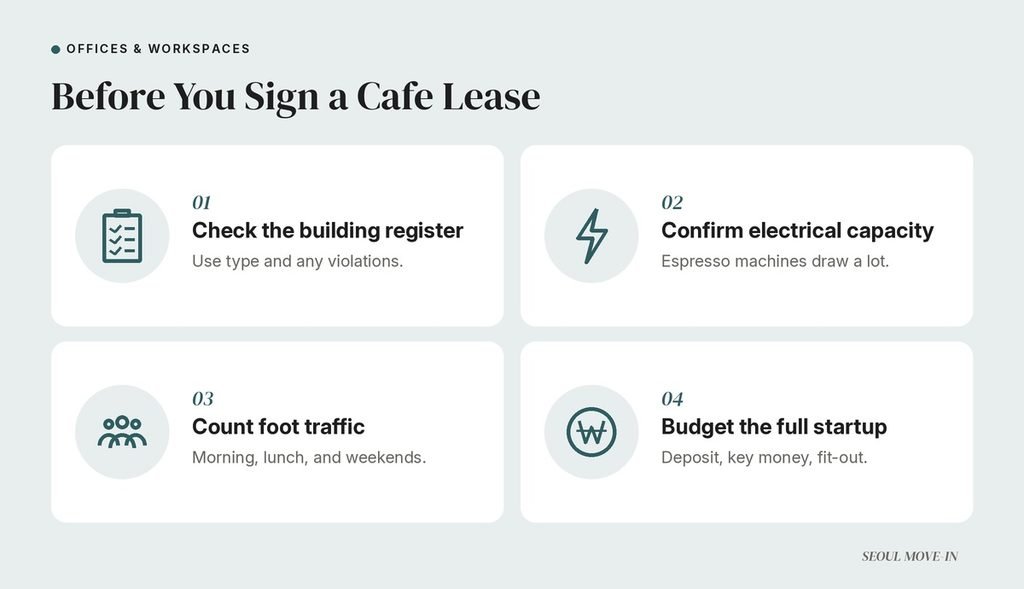
Many first-time owners fall in love with a space and only later discover it can’t be used for a food business. Check the building register for the registered use and any violation records before paying a deposit or key money. Some older buildings also have limits on sewage or septic capacity that can block a food business permit. Ask the district office or your agent to confirm before you commit.
2. Ignoring Electrical Capacity
Commercial coffee equipment needs far more power than a typical small shop. If the existing capacity isn’t enough, increasing it can require the landlord’s consent, an application to the power company, and real installation costs. Confirm the current capacity, who pays for any upgrade, and how long it takes before signing.
3. Reading Foot Traffic at the Wrong Time
A street that’s crowded at 8 p.m. may be empty at 8 a.m., and office districts can go quiet on weekends. Count people at your planned opening hours on weekdays and weekends, and watch where they’re heading. A cafe location in Seoul near offices lives on morning and lunch traffic, while one in a residential area depends on afternoons and weekends. Our guide to Seoul Business Districts explains how each area moves.
4. Underestimating the Startup Cost
The lease is just the beginning. Deposit, key money, interior work, equipment, signage, permits, and VAT on rent add up quickly, and many leases require you to restore the space when you leave. Clarify key money terms in writing and confirm the landlord will sign with you before paying anything, as explained in What Is Key Money in Korea.
5. Overlooking Nearby Competition
In Seoul, it’s common to find several cafés on a single block. Competition isn’t always bad, since it can signal demand, but check who you’re competing with: large franchises, specialty roasters, or budget takeout shops. Make sure your concept and price point fill a real gap, and that expected sales can comfortably cover rent and maintenance fees.
The Bottom Line on Choosing a Cafe Location in Seoul
The best cafe location in Seoul is one that’s legally usable, technically ready, and busy at the hours you’ll be open. Check the building register and utilities first, study foot traffic carefully, budget for the full startup cost, and understand the competition before you sign. Once you’ve signed, register your business through Hometax or your local tax office as soon as possible to secure your tenant protections.
Commercial property is our main focus, and café spaces are where my two careers meet. If you’re planning to open a café in Seoul, reach out through our Contact Us page with your concept, budget, and preferred area. We’ll check building use and utilities, review key money terms, and shortlist spaces that fit. Popular café neighborhoods are compared in Mapo vs Seongsu for Expats, and commercial brokerage fees are explained in Real Estate Agent Fees in Korea.