Retail space in Seoul can be a great opportunity for foreign entrepreneurs, whether you’re opening a café, a restaurant, a studio, or a small shop. But a street-level lease in Korea is very different from renting an apartment or an office. The building’s registered use, key money paid to the previous tenant, and the cost of fitting out the space can matter as much as the monthly rent.
Here’s how commercial leases for shops usually work, and the five mistakes that cost new business owners the most. If you need a workspace rather than a storefront, see our guide to Renting an Office in Seoul.
Table of Contents
How Renting Retail Space in Seoul Works
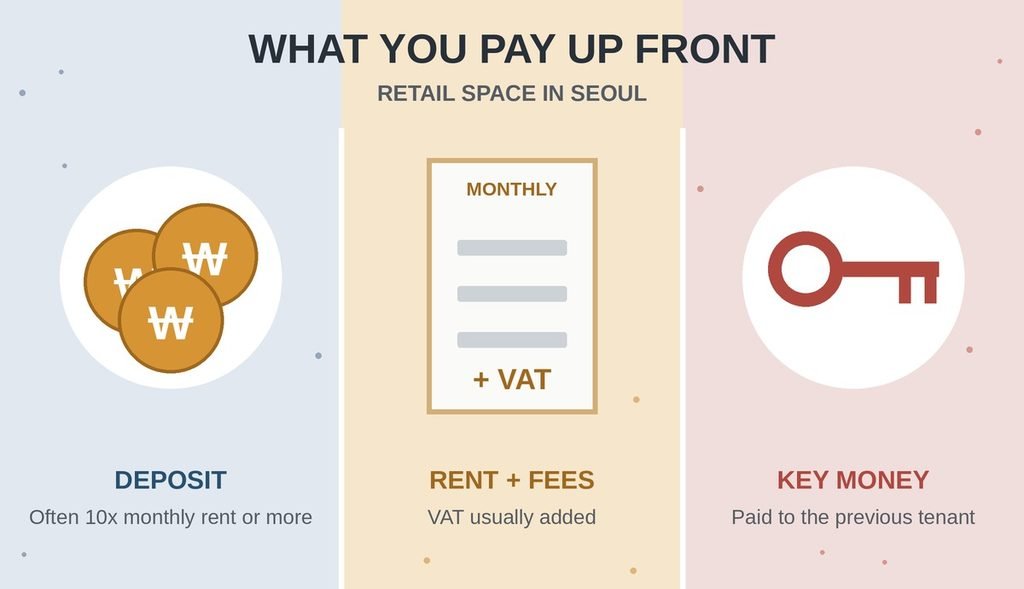
Most shop leases involve three upfront costs. The deposit is often around ten times the monthly rent, and in prime locations it can be much higher. Monthly rent and maintenance fees typically have 10% VAT added. In popular areas, the incoming tenant may also pay key money to the outgoing tenant for the location’s established customers, fixtures, or business rights.
Commercial tenants are protected by Korea’s Commercial Building Lease Protection Act. Among other things, it generally allows tenants to request renewal for up to ten years in total and protects their chance to recover key money when they leave. Some protections depend on the size of the deposit and rent, so it’s worth confirming how they apply to your lease. This article is general information, not legal advice.
1. Not Checking the Building’s Registered Use
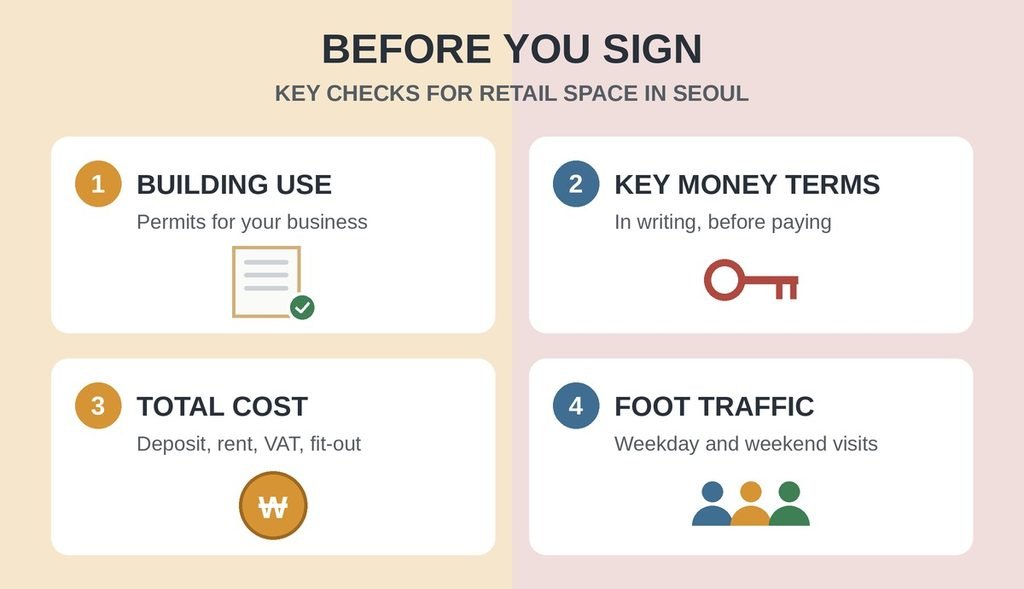
Not every space can host every business. Restaurants, cafés, and some service businesses need the building’s registered use to match, and many require a permit or report from the district office before opening. If part of the building was altered without approval, it may be listed as a violating structure, which can make it difficult to get the permits you need. Check the building register and confirm your business type is allowed before you pay anything.
2. Paying Key Money Without Clear Terms
Key money is common in Seoul, but it isn’t regulated like the deposit and isn’t returned by the landlord. Get a written agreement with the outgoing tenant that lists exactly what you’re paying for, such as equipment, interior, or customer base, and confirm the landlord will sign a new lease with you before any money changes hands. Our guide on What Is Key Money in Korea explains how it works.
3. Underestimating the Total Startup Cost
The lease is only the beginning. Interior work, signage, equipment, permits, and VAT on rent can add up quickly, and many leases require you to restore the space to its original condition when you leave. Build a full budget for retail space in Seoul that covers the deposit, move-in, the first months of operation, and eventual restoration.
4. Skipping Business Registration and the Fixed Date
Many tenant protections depend on registering your business at the shop’s address and, where applicable, getting a fixed date on the lease from the tax office. Business registration is handled through Hometax or your local tax office, and you’ll usually need your alien registration card. Do this as soon as possible after signing, not weeks later.
5. Judging the Location on a Single Visit
Foot traffic changes dramatically by hour and day. A street that’s busy on Saturday afternoon may be quiet on a Tuesday morning, and office districts can be empty on weekends. Visit at different times, watch who walks by, and look at which nearby shops are thriving or closing. Our guide to Seoul Business Districts can help you narrow down the area first.
The Bottom Line on Retail Space in Seoul
Retail space in Seoul rewards careful preparation. Confirm the building allows your business, put key money terms in writing, budget for the full startup cost, register your business promptly, and study the location at different times before you sign. These checks protect both your deposit and your investment in the shop itself.
Commercial property is our main focus. If you’re planning to open a shop or café in Seoul, reach out through our Contact Us page with your business type, budget, and preferred area. We’ll check building use and permits, review key money terms, and shortlist spaces that fit. Commercial brokerage fees follow a legal cap, explained in Real Estate Agent Fees in Korea.