Seoul business districts are not interchangeable. The city has three main office hubs, each with its own industries, client base, and character, and the one you choose shapes who you meet, who you can hire, and how your team gets to work every day. Picking based on a single listing or a familiar name is one of the most common ways foreign companies end up in the wrong place.
Here’s a quick guide to the three main hubs, and the five mistakes to avoid when choosing between them. Once you’ve narrowed down the area, our guide to Renting an Office in Seoul covers costs and lease terms in detail.
Table of Contents
The Three Main Seoul Business Districts
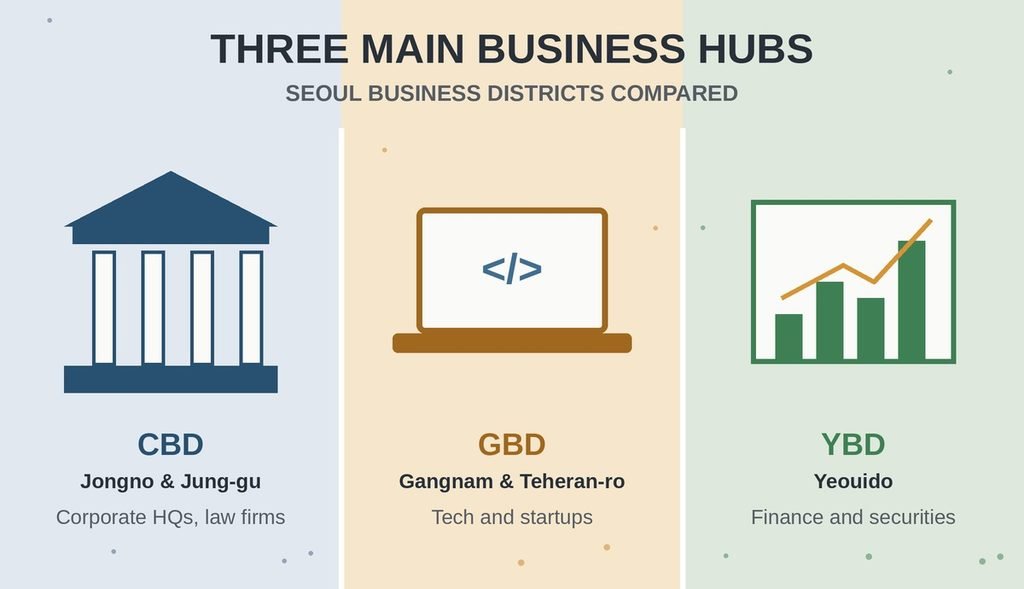
CBD (Jongno and Jung-gu). Seoul’s historic center around Gwanghwamun and City Hall. It’s home to many corporate headquarters, government offices, embassies, and law firms. A strong fit for companies that work closely with large Korean conglomerates or public institutions.
GBD (Gangnam and Teheran-ro). The commercial heart south of the river, with Teheran-ro long known as a hub for IT companies and startups. It offers a wide range of building sizes, from small offices to large towers, and a dense mix of tech, consulting, and service businesses.
YBD (Yeouido). An island district on the Han River and Korea’s financial center, home to the Korea Exchange, major securities firms, and the National Assembly. Ideal for finance, investment, and firms that serve them.
Beyond the big three, areas like Seongsu and Pangyo have grown as options for creative businesses and tech companies. For a broader look at investing and setting up in Korea, Invest Korea offers guidance for foreign companies.
1. Choosing by Reputation Instead of Client Location
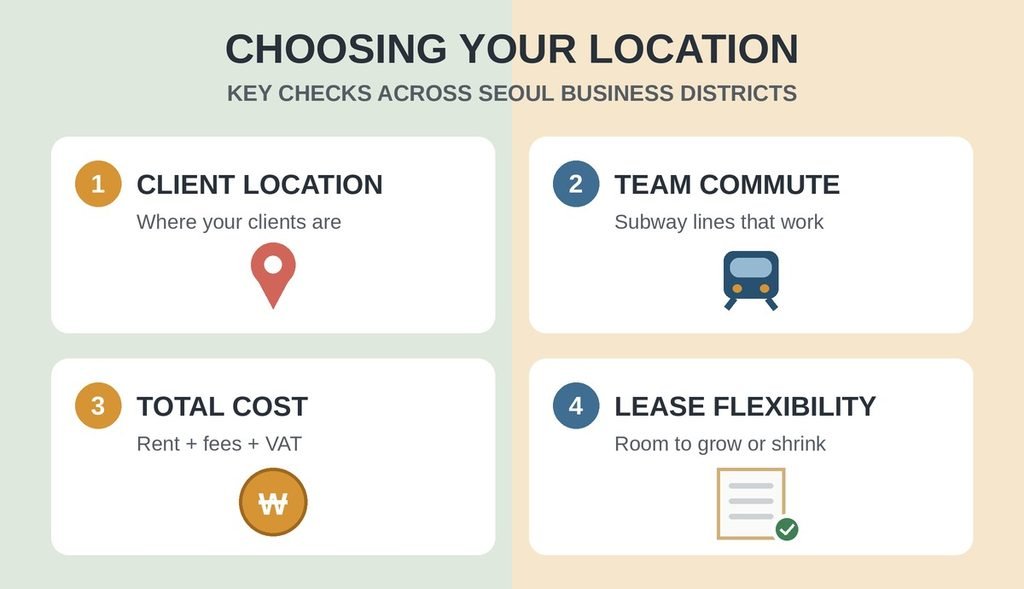
A prestigious address only helps if your clients are nearby. A fintech firm in the CBD may spend hours each week traveling to Yeouido, while a company serving conglomerate headquarters may find Gangnam inconvenient. Map where your most important clients and partners are before comparing Seoul business districts.
2. Ignoring Your Team’s Commute
Seoul’s subway network is excellent, but a single transfer can add a lot to a daily commute. Check which lines serve each building and where your current or future team is likely to live. An office one or two stations from a major interchange can make hiring noticeably easier.
3. Comparing Areas by Rent Alone
Rent levels differ between Seoul business districts, but so do management fees, building quality, and the gap between contract area and usable space. A cheaper rent in an older building can end up costing more per usable square meter than a newer one nearby. Compare the total monthly cost, including fees and VAT, not just the quoted rent.
4. Overlooking Building Grade
Large prime buildings offer professional management, security, meeting facilities, and an address clients recognize. Smaller buildings can be more flexible and affordable, but services and maintenance quality vary widely. Decide which matters more for your stage, and visit at different times of day before committing.
5. Signing a Long Lease Before Your Team Size Is Clear
Many foreign companies arrive with a small team and grow quickly, or shrink after a pilot phase. Committing to a large space for several years too early can be costly. A serviced office or coworking space can be a smart first step while you test which of the Seoul business districts truly fits your business.
The Bottom Line on Seoul Business Districts
The best of the Seoul business districts for your company is the one closest to your clients, easiest for your team to reach, and right-sized for where your business is today. Location decisions are hard to reverse, so it pays to compare options side by side before signing. Once you’re ready, review the contract basics in Signing a Lease in Korea.
Commercial property is our main focus. If you’re comparing office locations in Seoul, reach out through our Contact Us page with your industry, team size, and target move-in date, and we’ll shortlist options across the districts that fit. Commercial brokerage fees follow their own legal cap, explained in Real Estate Agent Fees in Korea. Looking for a place to live, too? See Itaewon vs Haebangchon for Expats.