Utility bills in Korea can be confusing at first, not because they’re expensive, but because they come from several different places. Some costs are bundled into your building’s maintenance fee, some arrive from a regional gas company, and some depend on an internet contract you signed in your first week. Knowing who bills what saves you from late fees, cold showers, and surprises when you move out.
Here’s how it works, and the five mistakes foreign renters make most often. If you’re still choosing a home, our guide to Signing a Lease in Korea explains what to check before the contract is signed.
Table of Contents
How Utility Bills in Korea Are Split
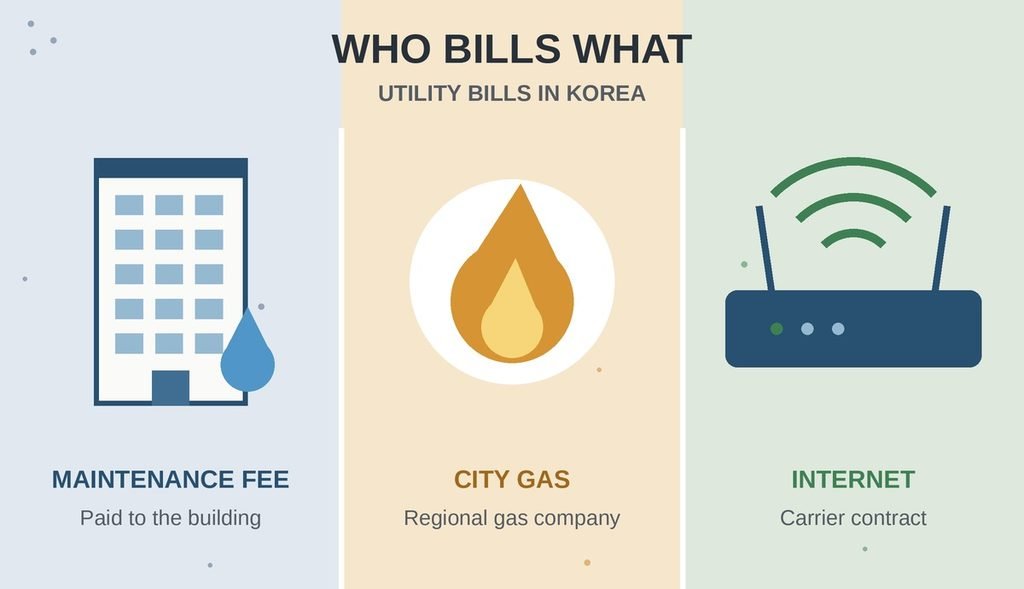
Most renters deal with three main sources. The maintenance fee (gwanribi) is paid to the building or management office and often covers shared costs like cleaning, security, and elevators, and in many officetels also water and sometimes electricity. City gas, used for heating, hot water, and cooking, is billed separately by the regional gas company. Internet comes from a carrier contract you set up yourself.
Electricity is supplied by KEPCO, Korea’s national power company, and depending on the building it’s either billed to you directly or included in the maintenance fee. Ask your agent or landlord which applies to your unit.
1. Not Asking What the Maintenance Fee Includes
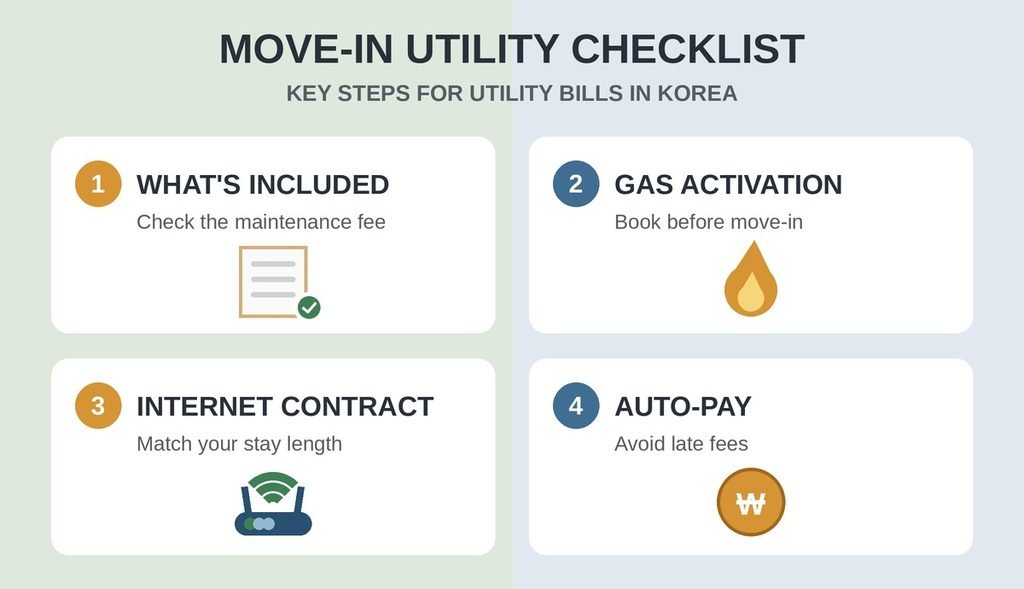
Two units with the same rent can have very different monthly costs once the maintenance fee is added. Before signing, ask what it covers: water, electricity, internet, cleaning, parking. A higher fee that includes more can work out cheaper than a low fee with everything billed separately.
2. Forgetting to Book Gas Activation
In many homes, the gas has to be opened by a technician from the gas company, who also does a safety check. Appointments aren’t always available the same day, so call the regional gas company a few days before you move in. Otherwise you may arrive to no heating and no hot water, which is especially painful in a Seoul winter.
3. Signing an Internet Contract Longer Than Your Stay
Internet plans in Korea are often offered with multi-year contracts, and cancelling early can mean a real termination fee. If you’re not sure how long you’ll stay, ask about shorter terms or whether the contract can be transferred. Some buildings already include internet in the maintenance fee, so check before signing anything. Our guide to Getting a Phone Plan in Korea covers the same contract-length trap for mobile plans.
4. Missing Payments Because Bills Are in Korean
Utility bills in Korea usually arrive in Korean, by paper, text, or app, and it’s easy to overlook one. The simplest fix is setting up automatic payments from your Korean bank account wherever possible. Late payments typically add fees, and repeated misses can lead to service interruptions.
5. Not Settling Final Bills Before Moving Out
When you move out, the final gas, electricity, and maintenance fee charges need to be calculated up to your move-out date. Landlords often settle these before returning the deposit, so unpaid bills can delay or reduce what you get back. Arrange final meter readings and confirm the amounts in advance, as explained in Getting Your Deposit Back in Korea.
The Bottom Line on Utility Bills in Korea
Utility bills in Korea are manageable once you know the three sources: the maintenance fee, city gas, and internet. Ask what’s included before you sign, book gas activation early, match your internet contract to your stay, set up auto-pay, and settle everything before you move out. On move-in day, don’t forget your move-in report and fixed date as well.
If you’d like help comparing homes by their real monthly cost, not just the rent, reach out through our Contact Us page with your budget and target move-in date. We’ll explain exactly what each option includes before you decide.