Health insurance in Korea is one of the first systems foreign residents become part of, often before they realize it. Korea’s National Health Insurance Service (NHIS) covers most residents, including many foreigners, and it can make doctor visits, prescriptions, and hospital stays far more affordable than in many other countries. But enrollment rules, monthly premiums, and bills sent to your registered address catch plenty of newcomers by surprise.
Here’s how coverage generally works, and the five mistakes that lead to unexpected bills or problems later. Since your registered address plays a big role, it helps to understand our guide to the alien registration card first.
Table of Contents
How Health Insurance in Korea Works for Foreigners
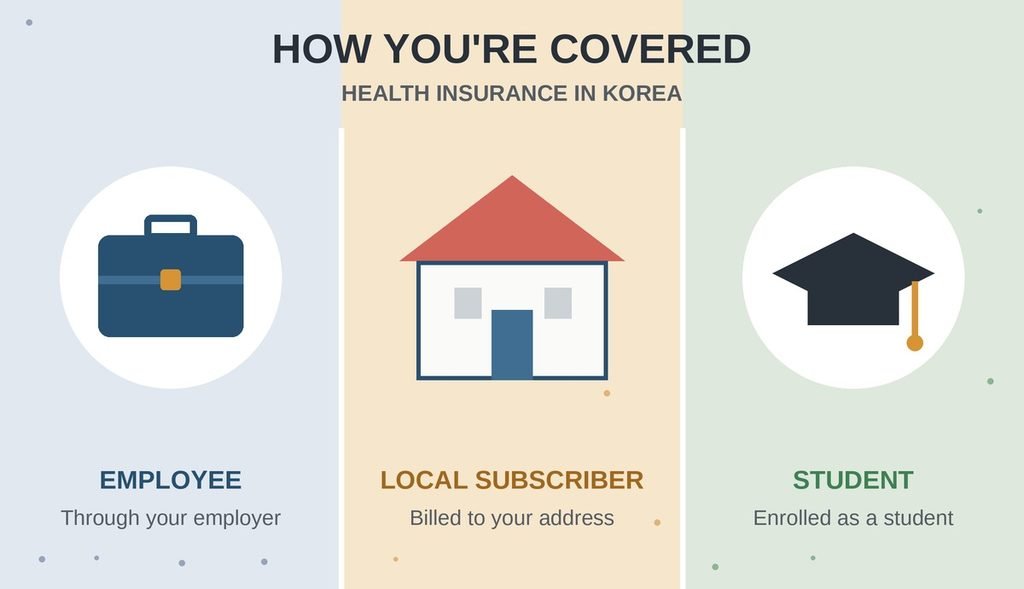
Most foreign residents are covered by NHIS in one of three ways:
Employees are usually enrolled through their employer from the start of employment, with premiums split between the company and the employee and deducted from salary.
Local subscribers include freelancers, self-employed people, and others without workplace coverage. In general, foreign residents who stay in Korea for six months or more are enrolled automatically, and premiums are billed to their registered address.
Students on student visas are generally enrolled as well, often with reduced premiums.
Rules and premium levels change from time to time, so check the details for your visa type with the National Health Insurance Service. This article is general information, not official guidance.
1. Not Updating Your Address
Premium notices and official letters are sent to the address registered with immigration. If you move and don’t update it, bills can go to your old home and quietly turn into unpaid premiums. Report your new address promptly after every move, as explained in our guide to the move-in report and fixed date.
2. Ignoring Premium Bills
Unpaid premiums don’t just disappear. In many cases they can limit your insurance benefits and may cause problems when you apply to extend your stay or change your visa. Check your bills each month, especially in the first year when you may be switching between employee and local coverage.
3. Not Setting Up Automatic Payment
The easiest way to avoid missed payments is to set up auto-pay from your Korean bank account. Bills and notices are usually in Korean, and it’s easy to overlook one during a busy month. Auto-pay keeps health insurance in Korea running in the background so you don’t have to think about it.
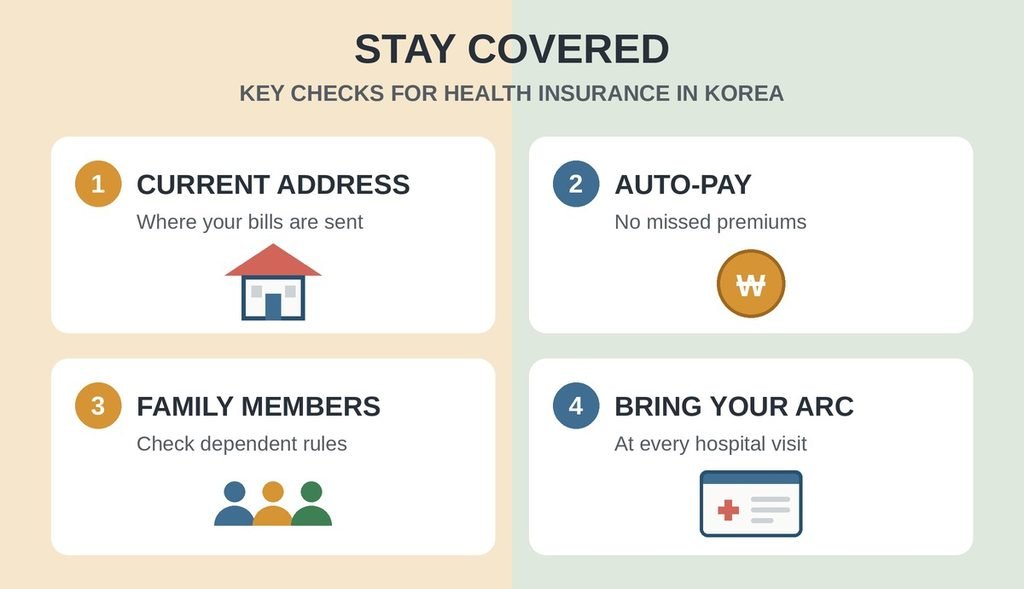
4. Assuming Family Members Are Covered Automatically
Spouses and children may be able to join as dependents of an employee or be included in a local subscriber’s household, but there are conditions, and the rules have been tightened in recent years. Check eligibility and required documents before assuming your family is covered, especially if they arrive in Korea after you.
5. Forgetting Your ARC at the Hospital
Clinics and hospitals usually check your identity before applying insurance coverage. Bring your alien registration card, or have a digital ID ready if the facility accepts it, to every visit. Without it, you may be charged the full uninsured price and need to sort out a refund later.
The Bottom Line on Health Insurance in Korea
Health insurance in Korea is a real benefit for foreign residents, as long as you keep the basics in order. Know which type of coverage applies to you, keep your address current, pay premiums on time with auto-pay, confirm the rules for family members, and carry your ARC to every appointment.
Settling into a new home involves a lot of paperwork, and address updates affect everything from insurance bills to your deposit protection. If you’re relocating to Seoul and want help planning your move-in, reach out through our Contact Us page with your arrival date and budget. We’ll help you find a home and walk you through the address steps that follow, alongside guides like Paying Utility Bills in Korea.