Trash disposal in Korea is one of the first things that surprises new arrivals. You can’t simply put everything in one bag and leave it outside. General waste, food waste, and recycling each follow their own rules, and the details can vary from one district to the next. Get it wrong and your bag may be left behind with a warning sticker, or you could face a fine.
Here’s how the system works, and the five mistakes expats make most often. If you’ve just moved in, our guide to Paying Utility Bills in Korea covers the other setup tasks for your first week.
Table of Contents
How Trash Disposal in Korea Works
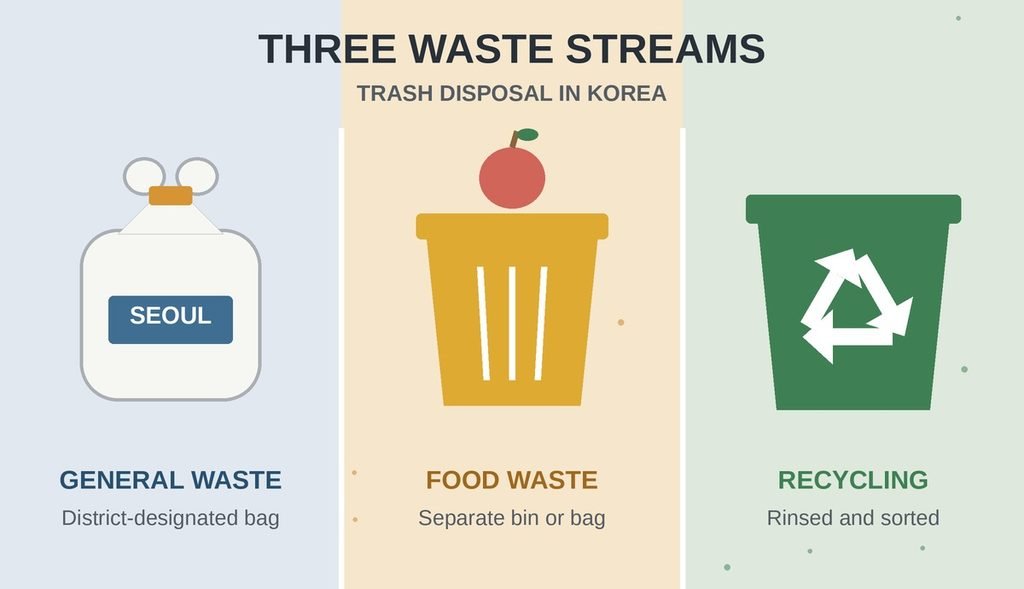
Korea uses a volume-based waste fee system. Instead of paying a flat garbage fee, you buy official designated bags for general waste, and the price of the bag covers the cost of collection. Waste is split into three main streams:
General waste goes into designated bags sold at convenience stores, supermarkets, and some local shops. Food waste is collected separately, using special bags, bins, or card-operated machines depending on your building. Recyclables such as plastic, paper, cans, glass, vinyl, and styrofoam are sorted and placed in separate bins or clear bags.
Rules are set by each district office, so check your district’s website or the Seoul Metropolitan Government site for local details.
1. Using the Wrong Bag
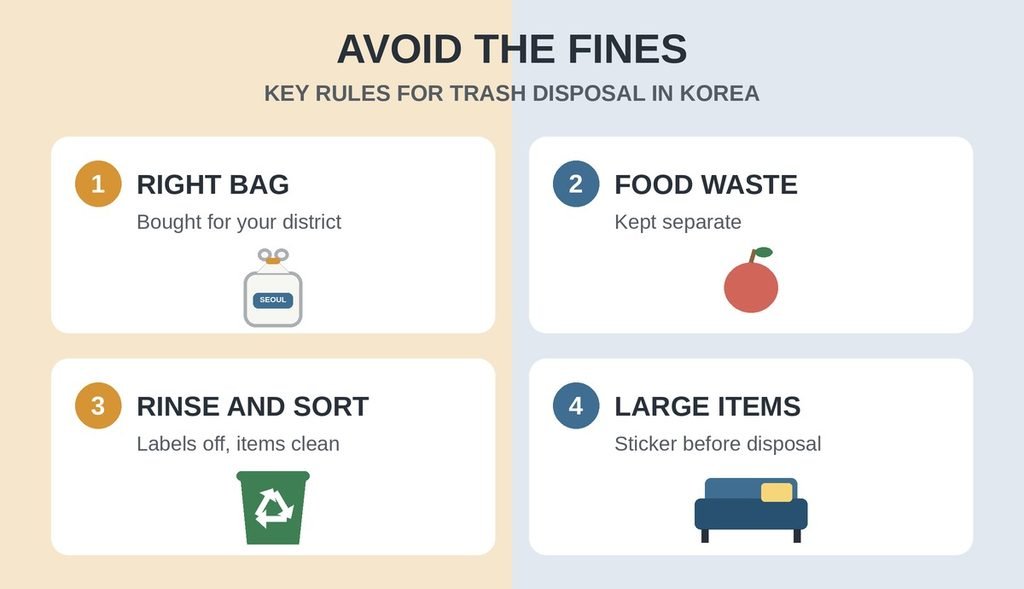
Regular plastic bags aren’t accepted for general waste. You need the official designated bag, and in most cases it has to be one sold for your specific district. A bag bought in a neighboring district may not be collected. When you buy bags, check that the district name printed on them matches where you live.
2. Mixing Food Waste With General Trash
Food waste must be kept separate, but not everything from the kitchen counts as food waste. Items like animal bones, shellfish shells, eggshells, and hard fruit pits usually go in general waste instead, because they can’t be processed as feed or compost. Ask your building manager how food waste is collected in your building, since apartments, officetels, and villas often use different methods.
3. Not Rinsing and Sorting Recyclables
Recyclables need to be clean and properly separated. Rinse food containers, remove labels from clear plastic bottles where required, flatten boxes, and keep vinyl and styrofoam apart from other plastics. Dirty or mixed recyclables may be rejected. Many buildings post sorting guides near the collection area, so a quick photo of yours can save a lot of guessing.
4. Leaving Out Large Items Without a Sticker
Furniture, mattresses, and large appliances can’t go out with regular trash. You need to report them to your district office, often online, pay a disposal fee, and attach the sticker or receipt number to the item before putting it out. This matters most at move-out, when leftover furniture can delay your inspection, as explained in Getting Your Deposit Back in Korea.
5. Ignoring Collection Days and Building Rules
Officetels and apartments usually have a dedicated disposal area you can use anytime. Villas and smaller buildings often rely on curbside collection, with trash put out on specific days and times, usually in the evening. Putting bags out on the wrong day can lead to complaints from neighbors or fines from the district. Ask your landlord or neighbors about the schedule when you move in.
The Bottom Line on Trash Disposal in Korea
Trash disposal in Korea becomes routine once you know the basics: use your district’s designated bags, keep food waste separate, rinse and sort recyclables, get a sticker for large items, and follow your building’s schedule. It’s worth asking about the disposal system when viewing homes, too, since it can make daily life noticeably easier.
If you’re choosing a home and want to know exactly how each building handles trash, utilities, and maintenance, reach out through our Contact Us page with your budget and target move-in date. We’ll cover these practical details before you sign, along with everything in Signing a Lease in Korea. Still choosing a neighborhood? See Mapo vs Seongsu for Expats.