A coworking space in Seoul is often the fastest way for a foreign founder or remote worker to get a professional base in the city. You can move in within days, skip the furniture and internet setup, and avoid a large office deposit. But memberships vary more than they look, and the cheapest desk isn’t always the one that works for your business.
Here’s how coworking memberships in Seoul usually work, and the five mistakes that turn a flexible deal into a bad one. If you’re also considering a traditional lease, our guide to Renting an Office in Seoul explains how private offices compare.
Table of Contents
How a Coworking Space in Seoul Works
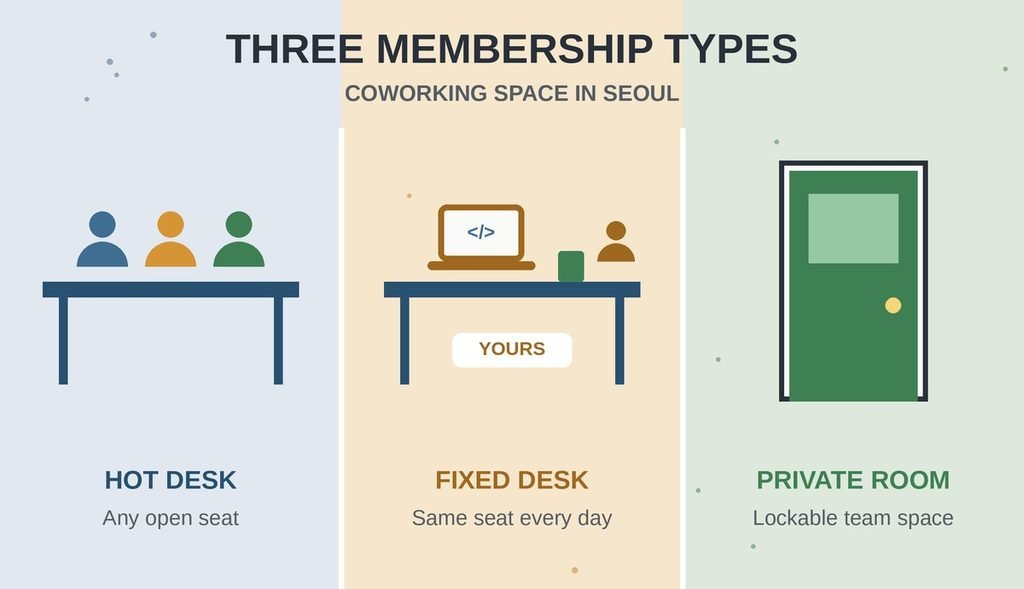
Most coworking operators offer three main options. A hot desk gives you any open seat in a shared area. A fixed desk reserves the same seat for you every day, usually with some storage. A private room is a lockable office for one person or a whole team, with shared kitchens, lounges, and meeting rooms outside.
Memberships are typically monthly, often with a deposit of around one or two months’ fees, and prices usually add 10% VAT. Many locations sit in or near the main business districts, which we cover in Seoul Business Districts, while newer creative hubs like Seongsu also have plenty of options.
1. Choosing a Hot Desk When You Need More
A hot desk is the cheapest option, but it suits individuals who come and go. If you take calls all day, handle confidential documents, or need a consistent place for your team, a fixed desk or private room is often worth the difference. Think about how you’ll actually work there on a normal Tuesday, not just the monthly price.
2. Assuming Every Address Works for Business Registration
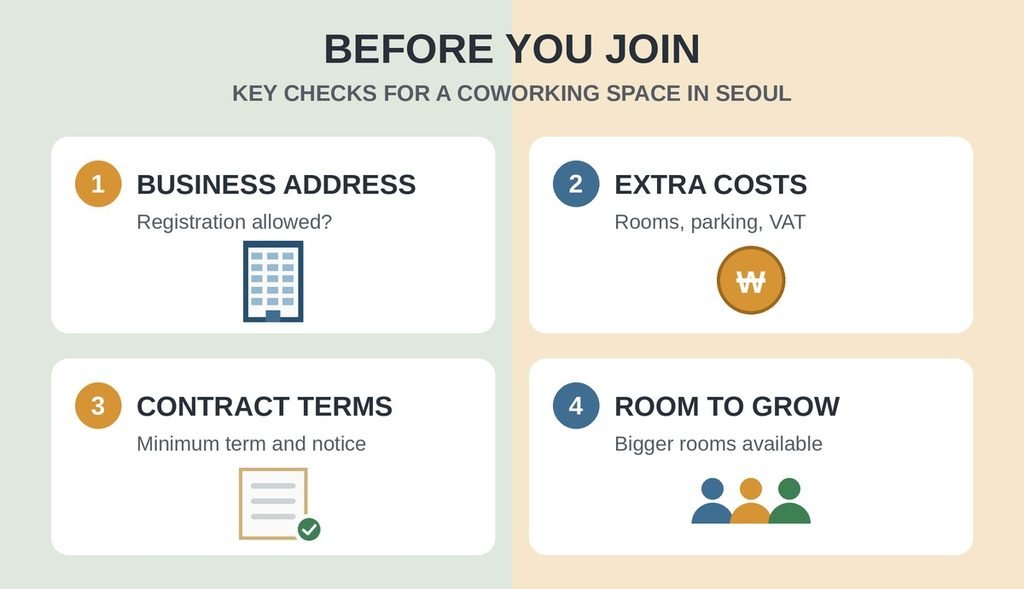
Many coworking spaces allow members to register a business at their address, but rules depend on the operator, the membership type, and your business. Some industries or visa types may require a dedicated, enclosed space rather than a shared desk. Confirm with the operator in writing, and check requirements with your local tax office or through Hometax before you sign up.
3. Overlooking Extra Costs
The headline price rarely includes everything. Meeting rooms may run on monthly credits that disappear quickly, and extra hours cost more. Parking is often limited and charged separately, and printing, mail handling, and phone booths can add up. Ask for the full price list and add VAT to compare one coworking space in Seoul against another fairly.
4. Not Reading the Contract Terms
“Flexible” doesn’t always mean you can leave anytime. Many memberships have a minimum term, a required notice period of a month or more, and automatic renewal, sometimes at a higher price. Check how and when you can cancel, what happens to your deposit, and whether the rate is fixed for the full term.
5. Staying Too Long After Your Team Grows
Coworking is efficient for small teams, but the cost per person rises quickly as you add desks or move into larger rooms. At some point, a private leased office becomes cheaper and gives you more control over layout and branding. Review the numbers every few months, and ask whether the operator has larger rooms available before you outgrow your space.
The Bottom Line on Choosing a Coworking Space in Seoul
The right coworking space in Seoul matches how you work, allows the business registration you need, and has costs and contract terms you fully understand. It’s a smart first step for many foreign companies, especially while you test the market or wait for your team size to settle. Have your alien registration card ready, since operators usually need it to sign you up.
Commercial property is our main focus. If you’re deciding between coworking and a private office, reach out through our Contact Us page with your team size, preferred area, and timeline. We’ll compare both options side by side. For private office leases, brokerage fees are explained in Real Estate Agent Fees in Korea. Looking for a place to live nearby, too? See Mapo vs Seongsu for Expats.